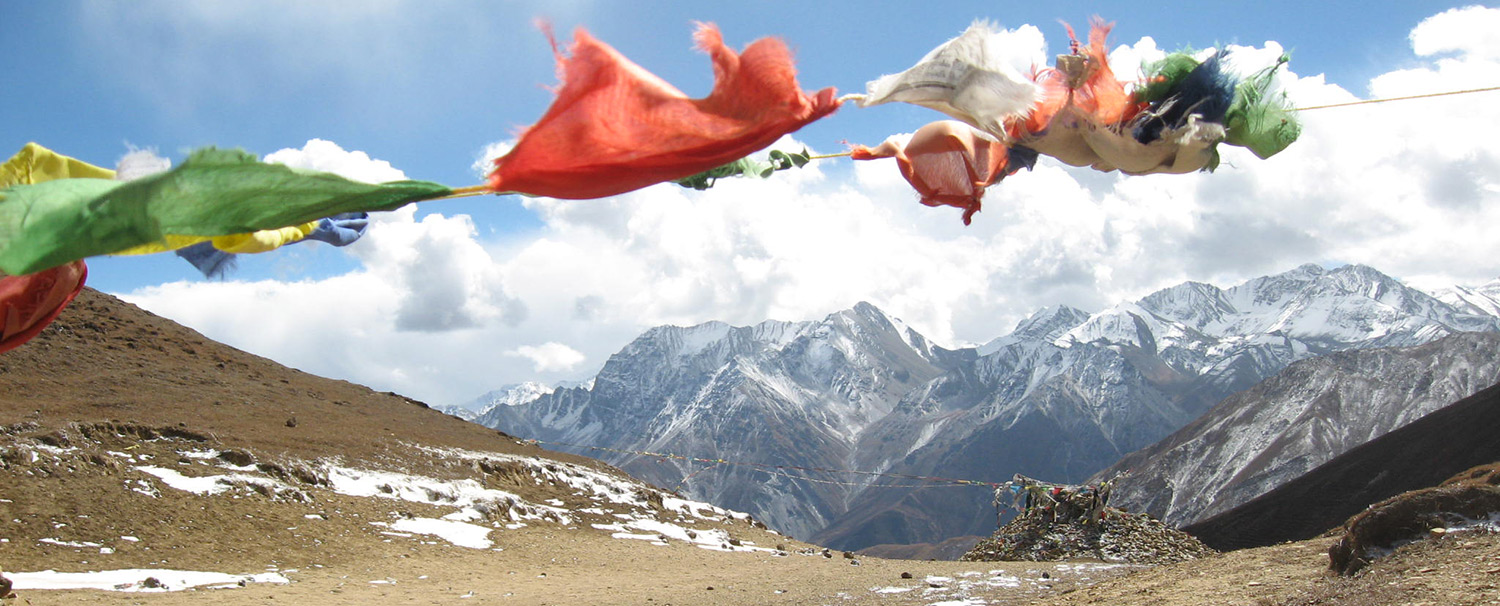
Unless you have trekked before, it is not advisable to travel alone in the Himalayas. Even for an experienced trekkers, it is best to take a guide along for any untoward eventualities. Plus in some areas it is illegal to travel alone.
Can anyone trek or they require previous trekking experience?
Anyone can trek, be it children, women or old. The minimum criteria would be to have a good physical and mental condition. There are some difficult high passes and high altitude trails in the Himalayas that would definitely require to have some trekking. But then there are also short treks and hikes that you can go for easily.
What equipment is required for trekking?
Depending on where you are going, how long and which time of the year you will be trekking, which time of the year, trekking equipment varies. However, below is a list of some necessary items that would be required for any level of trekking.
Down Jacket
Down Sleeping Bag
Long sleeved shirt
Jumper or fleecy jacket
T – shirts
Trekking shoes or boots
Comfy shoes for around the camp
Mountain trekking boot
Polypropylene/wool socks
Light cotton socks for under wool sock
Rucksack
Sun hat
Woolen hat
Gloves
Sun block for lips
Goggles or sunglasses
Long underwea
Insulated pants
Nylon windbreaker
Nylon wind pants
Water bottle
Sewing kit
Medical & first aid kit
Flash light
Batteries and bulbs
Swiss army knife
Towel and toiletries
Can I hire or buy trekking equipments in Nepal?
Yes, you can hire or buy trekking equipments in Nepal. There are shops that sell locally made trekking items and also international brands like Mountain Gear and North Face.
What is teahouse trekking?
Teahouse trekking is a very conventional and popular type of trekking usually done in Everest, Langtang and Annapurna areas. In this type of trekking, trekkers used lodges and guesthouses along the way for accommodation and food. So there is really no need to carry camping equipment and porters.
What is camping trek?
A camping trek, as opposed to teahouse trek, is often termed as full board or full organized trekking. This means that we will be going to places where there are no facilities of lodges and guesthouses. We will be carrying full camping gear including tents, sleeping bags, mattress as well as provision for food supplies. We will also be trekking with a team of guides, cooks, sherpas and porters to accompany you.
We will sleep in tents and eat food made by the cooks.
Do I need to get trekking permit?
There are two types of trekking areas in Nepal: Normal and Restricted areas. Normal areas such as Everest, Annapurna and Langtang do not require trekking permits to trek. However there are some restricted areas like Dolpo, Upper Mustang, Taplejung that do require special trekking permits on the part of trekkers.
What is high altitude sickness (HAS)? How do I a avoid it?
High altitude Sickness (HAS) is characterized by dizziness, headache, vomiting, nausea and if not treated can result in death. Many climbers and trekkers travelling to high altitude Himalayan regions can suffer from HAS. HAS is quite normal for people trekking in the high altitude region. HAS occurs due to the fact that as we ascend to higher altitudes the level of oxygen decreases and lack of acclimatization.
Once you have the symptoms don’t get worried and panic. Our guide will help you to acclimatize with the climate. We advise you to drink plenty of water and ascend slowly. If you have the symptoms, rest for sometime. And if the symptoms don’t fade than you could descend to a lower camp.
What is your payment terms and conditions.
Please click here to find out about our terms for payments.
How good is communication in rural areas, especially when I am trekking?
Places like Everest, Annapurna and Langtang have plenty of facilities for communication such as internet, satellite phones and mobile phones. But that facilities may be limited in far off places like Dolpo, Upper Mustang, Taplejung, Humla, Jumla where the only available means could be telephones.
Is your staff well paid and insured?
Yes, our staffs including all our guides and porters are well paid and insured.
Do I get clean water in trekking?
Although mineral water bottles are available in some trekking routes, we advise you not to buy too many bottles for environmental reason. Please carry a bottle with you which you can refill again and again. We advise you to purify the water. Also, we provide limited amount of hot drinking water for our clients in the evening.
How much will porters carry?
Porters are allowed to carry not more than 30 kg.
When is the best time for trekking in Nepal?
The best time for trekking in Nepal is Autumn (October to early December) and Spring (March-May). This is the time when hills, valleys and forests come alive with blooming flowers, spring flowing forth and wildlife activities. June-July is a season for monsoon when much of Nepal experiences heavy rainfall. Trans Himalayan region such as Upper Mustang and Dolpo can be trekked during June-July season.
What is the weather like in Nepal?
The weather in Nepal differs from place to place. Nepal has three climatic zones, namely mountains or the Himalayas in the north, hills and valleys in the middle and plains in the south. The temperature in the mountains are colder than the hills and valleys. Plains in the south are generally hotter throughout the years. Snowfalls occur in Himlayan region during winter and the temperature is quite mild during summer. The hills and valleys are relatively warmer than the Himalayan region but has balmy and calm temperatures during spring.
The temperature in the mountains is below 5 degree Celsius during winter and not more than 15 in the summer. In the hills the temperature fluctuates between 10 to 30 degree Celsius.
Do you have airport pickup service?
Yes, we provide airport pickup services to all our clients within the package cost. Our staffs will be there at the airport holding a placard bearing your name to meet and greet you.

 Brochure