

Namche Bazaar
There comes a moment on the Everest trail when the Himalayas stop feeling like a photograph and start feeling real. For most trekkers, that moment happens in Namche Bazaar. Your legs are heavy from the climb. The thin mountain air has already begun testing your lungs. The long suspension bridges of the Dudh Koshi feel far below you now, and every steep switchback seems to ask the same question: how badly do you want to reach Everest? Then suddenly, the trail opens.
A vast amphitheater-shaped town appears across the mountainside, layered with colorful lodges, bakeries, stone homes, prayer flags, and winding pathways. Snow-covered Himalayan peaks tower above everything. Yaks move slowly along ancient trade routes while trekkers sip coffee beside glowing wood stoves. This is Namche Bazaar, the Sherpa capital of the Khumbu region and the gateway to Mount Everest. And for many travelers, this is the moment the Everest dream finally becomes real.
What Is Namche Bazaar?
Located at an altitude of 3,440 meters (11,286 feet) in Nepal’s Solukhumbu district, Namche Bazaar is the most important settlement in the Everest region. Every year, thousands of trekkers, climbers, guides, and mountaineers pass through this legendary Himalayan town on their way toward Everest Base Camp, Gokyo Lakes, Three Passes Trek, Ama Dablam expeditions, and other famous routes in Sagarmatha National Park.
Namche is far more than just a trekking stop. It is the economic, cultural, and social heart of the Khumbu region. It is where Sherpa traditions meet modern mountain tourism. It is where expedition teams prepare for Everest summits, where yak caravans still transport supplies through the mountains, and where exhausted trekkers discover that fresh espresso, apple pie, and Wi‑Fi somehow exist nearly 3,500 meters above sea level.
The energy here is unlike anywhere else in Nepal. Prayer flags flutter over narrow alleyways. The smell of coffee drifts through the cold mountain air. Monks spin prayer wheels beside gear shops selling down jackets and climbing ropes. Trekking groups from every corner of the world gather in tea houses each evening to share stories from the trail. Namche Bazaar is not simply a place you pass through. It becomes part of your Everest experience forever.
The First Real View of Everest
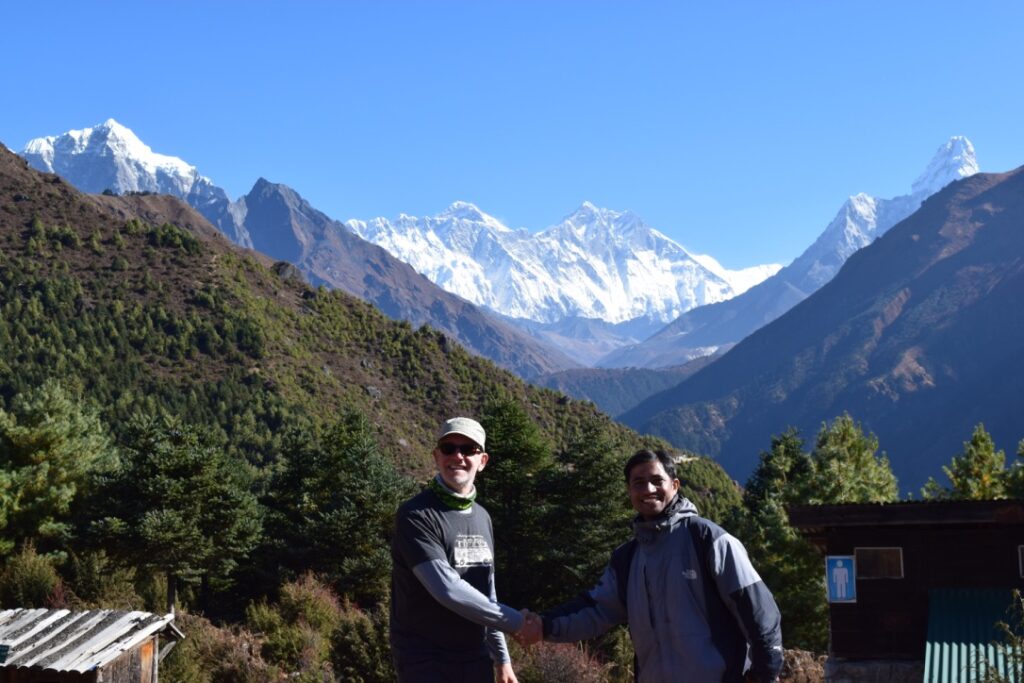
Long before trekkers stand at Everest Base Camp, they experience something unforgettable near Namche Bazaar: their first glimpse of Mount Everest. After crossing the famous Hillary Suspension Bridge and climbing steadily uphill through pine forest, there is a viewpoint where the trail suddenly reveals the dark pyramid of Everest rising far beyond the surrounding ridges.
At first, it seems surprisingly small, then reality hits. You are looking at the highest mountain on Earth. No photograph, documentary, or Instagram reel prepares you for how powerful that moment feels in real life. Trekkers often stop walking completely. Some smile. Some stare in silence. Some quietly cry without fully understanding why. And once you arrive in Namche, the mountain scenery only becomes more spectacular.
From the upper parts of town and the surrounding ridgelines, you can see:
- Mount Everest (8,848.86 m)
- Lhotse (8,516 m)
- Ama Dablam
- Thamserku
- Khangtenga
- Kongde Ri
- Nuptse
On clear mornings, the entire skyline glows gold under the first light of sunrise. It is one of the most extraordinary mountain panoramas anywhere in the world.
Everest View Hotel: The Most Famous Acclimatization Hike
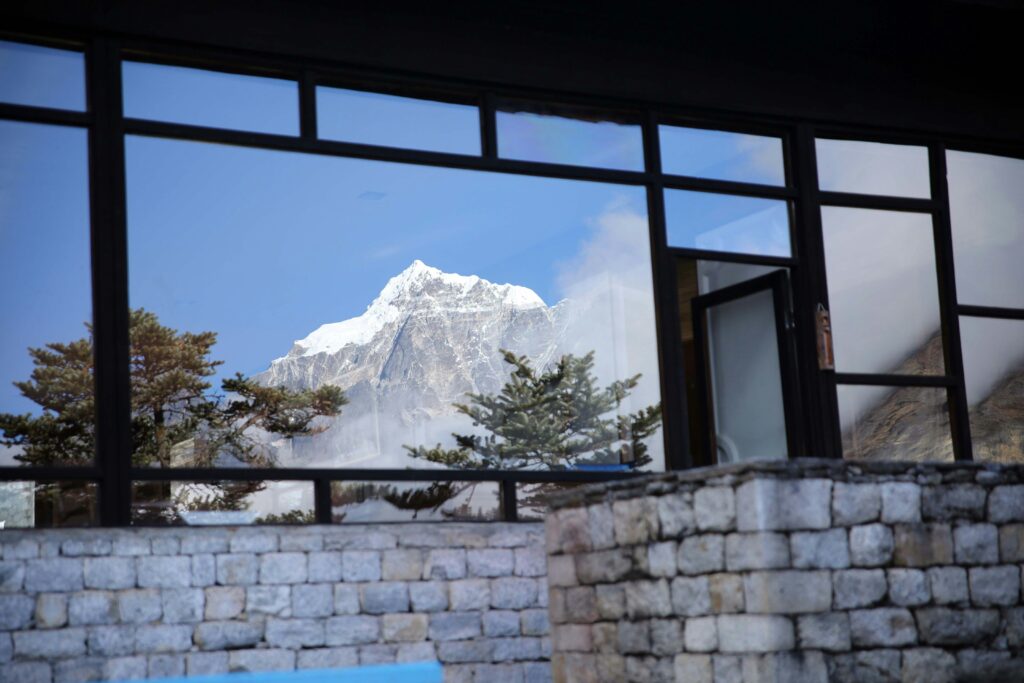
One of the best experiences in Namche Bazaar is the short acclimatization hike to the Everest View Hotel. Sitting at approximately 3,880 meters, this famous hotel is often described as the highest luxury hotel in the world. But people do not come here for luxury. They come for the view.
The trail climbs steadily above Namche through rhododendron forest, open ridges, and traditional Sherpa settlements before reaching a viewpoint where Everest, Ama Dablam, and the surrounding Himalayan giants suddenly dominate the horizon. Many trekkers order tea or coffee on the hotel terrace and simply sit in silence, staring at the mountains. The experience feels surreal.
Cold wind moves across the ridge. Prayer flags snap overhead. Everest rises in the distance while helicopters occasionally pass through the valley below. For countless travelers, this becomes one of the defining memories of their entire Nepal journey.
Why Acclimatization in Namche Bazaar Is so important?
Namche Bazaar is not only beautiful, it is essential. Nearly every Everest trekking itinerary includes at least two nights here for acclimatization, allowing the body time to adapt to the lower oxygen levels at altitude. Above 3,000 meters, altitude sickness becomes a genuine risk. The air contains significantly less oxygen than at sea level, and ascending too quickly can lead to Acute Mountain Sickness (AMS), which may become dangerous if ignored. This is why experienced guides repeat the same rule constantly:
“Climb high, sleep low.”
Namche Bazaar is the perfect place for acclimatization because there are so many rewarding side hikes nearby. Trekkers gain elevation during the day, then return to sleep lower in town at night. This process dramatically improves the body’s ability to adjust before higher sections of the Everest trail. Skipping acclimatization is one of the biggest mistakes trekkers make. Namche gives your body time to adapt while giving your mind time to fully absorb the scale and beauty of the Khumbu region.
Best Things to Do in Namche Bazaar
1. Hike to Everest View Hotel
The classic acclimatization route and easily the most popular activity in Namche. The views are extraordinary, the altitude gain helps your body adapt, and the route passes through some of the most scenic terrain in the Everest region.
2. Visit Khumjung Village
Located above Namche, Khumjung is one of the most important Sherpa villages in the Khumbu.
The village is home to:
- Khumjung Monastery
- The famous “Yeti scalp” display
- Hillary School, established by Sir Edmund Hillary
- Traditional stone homes and farmland
Compared to Namche, Khumjung feels quieter and more traditional, offering a deeper glimpse into Sherpa mountain life.
3. Explore the Sherpa Museum
Officially known as the Sagarmatha National Park Visitor Center, the Sherpa Museum is one of the most underrated stops in the Everest region.
The museum explains:
- Sherpa culture and traditions
- The history of Everest expeditions
- Wildlife and ecology of Sagarmatha National Park
- Mountaineering history in Nepal
The viewpoint behind the museum also offers one of the best free panoramic views near Namche Bazaar.
4. Walk to Syangboche Airstrip
This small airstrip above Namche provides sweeping views across the Khumbu Valley. Watching aircraft land here in difficult mountain conditions gives trekkers a completely new appreciation for Himalayan aviation. The surrounding ridge is also one of the best sunrise photography spots in the region.
5. Visit Thame Village
Trekkers with an extra acclimatization day should seriously consider hiking to Thame. This traditional Sherpa settlement lies northwest of Namche and feels wonderfully untouched compared to the busier Everest Base Camp route. The valley scenery is spectacular, and the monastery at Thame is among the oldest and most spiritual in the Khumbu region. The village is also connected to the family history of legendary mountaineers, including Tenzing Norgay.
Sherpa Culture: The Soul of Namche Bazaar
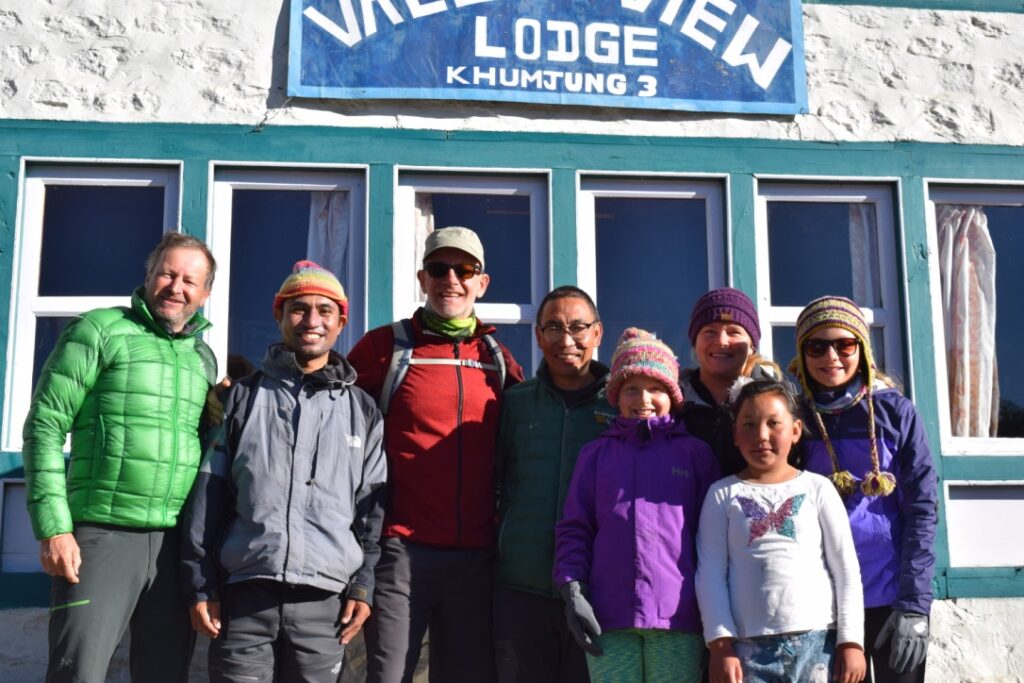
What truly makes Namche unforgettable is not just the mountains. It is the people. The Sherpas are the indigenous inhabitants of the Everest region and have lived in these high Himalayan valleys for generations. Their culture, resilience, spiritual traditions, and deep mountain knowledge shaped the history of Himalayan mountaineering. Without Sherpa climbers, guides, porters, and route experts, Everest expeditions as we know them would not exist.
In Namche Bazaar, Sherpa culture is not preserved behind museum glass. It is alive everywhere. Prayer wheels spin beside trekking trails. Buddhist mani stones line the pathways entering town. Monasteries overlook the valley from nearby ridges. Families continue traditions passed down through centuries while also running lodges, cafés, bakeries, and trekking businesses. The blend of ancient Himalayan tradition and modern trekking culture creates an atmosphere unlike anywhere else on Earth.
The Famous Saturday Market
If possible, plan your Namche stay around Saturday. Every week, the center of town transforms into a vibrant Himalayan market where local traders and villagers gather from surrounding valleys.
You will see:
- Fresh vegetables and produce
- Yak cheese and butter
- Traditional Sherpa clothing
- Mountaineering supplies
- Handmade crafts
- Livestock and household goods
The market is loud, chaotic, colorful, and completely authentic. Trekkers mix with Sherpa families, yak herders, guides, and expedition crews in a scene that feels more like a living cultural event than a tourist attraction. It is one of the best opportunities in the Everest region to witness daily Himalayan life beyond the trekking experience.
Food in Namche Bazaar: Surprisingly Good at 3,440 Meters
Almost every trekker arrives in Namche expecting basic mountain food. Almost every trekker leaves amazed by how good the food actually is. Namche Bazaar has developed into a genuine mountain food hub with bakeries, cafés, restaurants, and tea houses serving everything from traditional Nepali meals to fresh pastries and espresso.
Popular foods include:
- Dal bhat (rice, lentils, vegetables, pickle)
- Momos (Nepali dumplings)
- Thukpa noodle soup
- Tibetan bread
- Apple pie
- Pancakes
- Pasta and pizza
- Hot chocolate and espresso coffee
The famous bakeries in Namche are legendary among trekkers. After several long trekking days, sitting inside a warm bakery with fresh cinnamon rolls while snow peaks glow outside the window feels almost unreal. At altitude, comfort matters more than people expect. Namche delivers it beautifully.
Accommodation in Namche Bazaar
Namche offers some of the best accommodation options in the Everest region.
Trekkers can choose from:
- Budget tea houses
- Mid-range lodges
- Comfortable private rooms
- Luxury mountain lodges
Many lodges provide:
- Hot showers
- Wi‑Fi
- Charging stations
- Heated dining rooms
- Mountain-view rooms
During peak trekking seasons — especially October, November, March, and April — booking ahead is highly recommended because popular lodges fill quickly.
Sagarmatha National Park: A UNESCO World Heritage Site
Namche Bazaar lies within Sagarmatha National Park, one of Nepal’s most extraordinary protected areas and a UNESCO World Heritage Site. Established in 1976, the park protects:
- Mount Everest
- Himalayan glaciers
- Sherpa settlements
- Rare alpine wildlife
- Ancient forests and river valleys
Wildlife found in the region includes:
- Himalayan tahr
- Musk deer
- Snow leopard
- Himalayan monal
- Blood pheasant
- Red panda in lower forest zones
Even short walks around Namche provide an incredible introduction to the ecology of the high Himalayas.
Practical Information for Namche Bazaar
Altitude: 3,440 m / 11,286 ft
Recommended Stay: Minimum 2 nights
Region: Solukhumbu, Nepal
National Park: Sagarmatha National Park
Best Seasons: March–May and October–November
ATM: Yes, last reliable ATM on the trail
Internet: Available in most lodges
Electricity: Charging available for extra fee in some lodges
Emergency Help: Himalayan Rescue Association clinic
Market Day: Saturday
Pro tip: withdraw enough Nepali rupees in Namche before continuing higher into the Everest region. Cash becomes increasingly important at higher elevations.
How to Reach Namche Bazaar?
Option 1: Fly to Lukla and Trek
This is the standard route used by most Everest trekkers.
- Kathmandu to Lukla flight: approximately 35 minutes
- Trek from Lukla to Namche: 2 days
- Overnight stop usually in Phakding
The Lukla flight is considered one of the most scenic and dramatic short flights in the world.
Option 2: Trek from Jiri
The historic Everest approach used by early expeditions before Lukla Airport existed.This route adds 7–10 extra trekking days but offers a far deeper cultural experience through remote hill villages and less-touristed landscapes.Trekkers seeking a more traditional Everest journey often choose this route specifically because it feels more immersive and rewarding.
Option 3: Helicopter to Namche or Syangboche
Helicopter charters provide the fastest access to the Everest region.
This option is expensive but useful for:
- Travelers with limited time
- Luxury Everest tours
- Medical evacuations
- Aerial sightseeing experiences
Travel insurance with helicopter evacuation coverage is strongly recommended for all Everest trekkers.
Best Time to Visit Namche Bazaar
Spring (March–May)
- Rhododendron forests bloom across the hillsides
- Temperatures are moderate
- Everest expedition season begins
- Excellent trekking conditions
Autumn (October–November)
- Clearest mountain views
- Stable weather
- Peak trekking season
- Crisp blue skies and cool temperatures
Winter (December–February)
- Much colder conditions
- Fewer crowds
- Crystal-clear mountain visibility
- Snowfall possible
Monsoon (June–September)
- Heavy rainfall
- Cloudy mountain conditions
- Slippery trails
- Flight delays common
Most trekkers consider spring and autumn the best seasons for visiting Namche Bazaar.
Why Namche Bazaar Stays With People Forever?
Some places impress you while you are there. Namche Bazaar follows you home. Maybe it is the first sight of Everest. Maybe it is the sound of prayer flags in the wind above the valley. Maybe it is the warmth of a tea house after a freezing day on the trail, or the sight of Ama Dablam glowing pink at sunrise while the entire Khumbu slowly wakes beneath the mountains.
Or maybe it is something harder to explain.
Namche sits at the threshold between ordinary life and the high Himalayas. It is the place where trekkers stop thinking about Everest as an idea and begin experiencing it as reality. Whatever brought you to Nepal, adventure, curiosity, challenge, healing, or simply the desire to stand among the world’s greatest mountains, Namche Bazaar has a way of giving you more than you expected. And long after the trek ends, part of you quietly remains there in the thin mountain air, somewhere between the prayer flags and the snow peaks.


