
Nepal Tibet Trekking Touching soul of the Himalayas
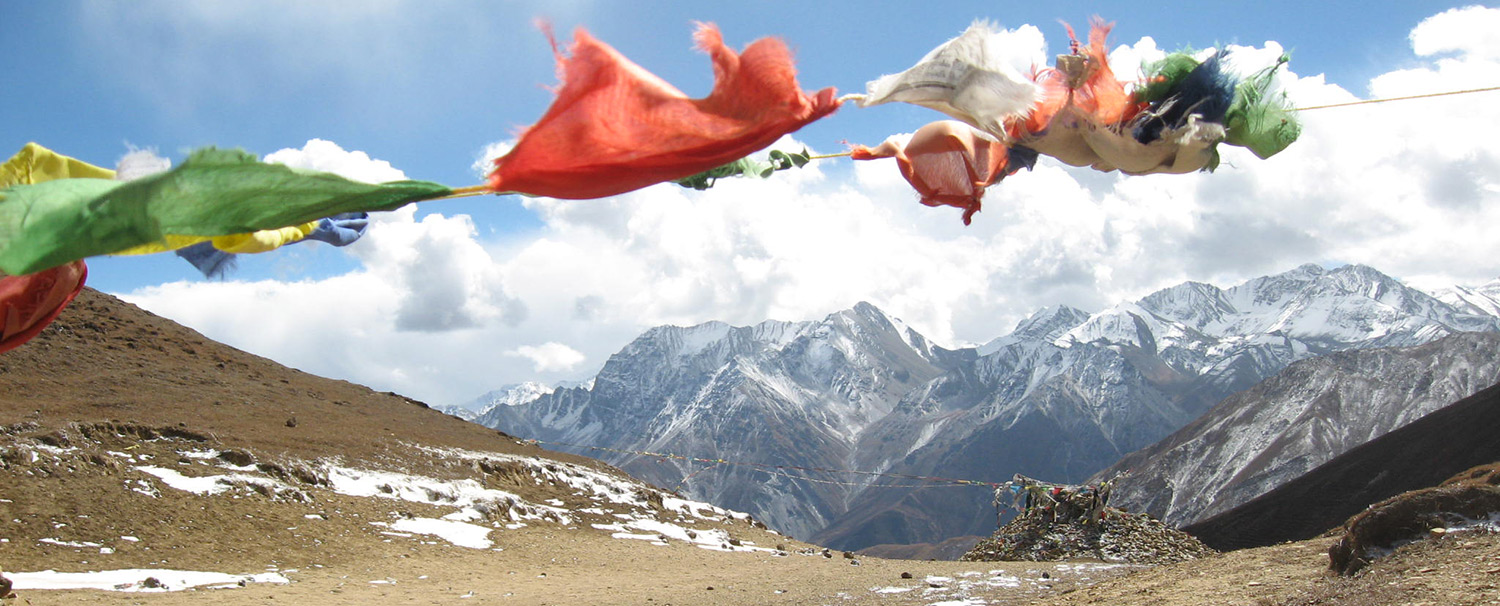
The Lhasa EBC Kailash Guge Trek is one of the most extraordinary overland expeditions on Earth, a 12 to 16-day journey across the sacred Tibetan Plateau, from the golden rooftops of Lhasa to the foot of Everest, from the holy waters of Lake Manasarovar to the wind-carved ruins of a forgotten kingdom. It is a trip that combines high-altitude adventure, ancient spiritual tradition, and landscapes so vast and otherworldly they seem borrowed from another planet.
Whether you are a spiritual seeker completing a lifelong pilgrimage, an adventure traveller hungry for roads less travelled, or a cultural explorer drawn to living history, this journey will meet you exactly where you are, and take you somewhere you never expected to go.
Tibet sits at an average elevation of over 4,500 metres. It is the highest plateau on Earth, and also one of the most carefully managed destinations for foreign visitors. Entry requires specific permits, organized tour arrangements, and advance planning which means that those who do make it here experience something increasingly rare: a place that has not been thinned out by mass tourism.
The landscapes are unfiltered. The monasteries are alive. The pilgrims are real. And the silence particularly in western Tibet near Kailash and Guge is the kind that reaches inside you.
This is not a destination you stumble into. You choose it deliberately, and it rewards that decision generously.
Your journey opens in Lhasa (3,650m), the spiritual and historical capital of Tibet, and one of the highest cities in the world. Spend two to three days here not just as a tourist, but as someone beginning to understand a civilisation built entirely around faith.
Stand before the Potala Palace a 13-storey, 1,000-room marvel that rises from the Red Hill like a vision and understand why it is recognised as a UNESCO World Heritage Site. This was the winter residence of the Dalai Lamas for over three centuries, and every corridor, chapel, and golden rooftop carries the weight of that history.
Walk the Barkhor Street pilgrimage circuit, where Tibetan pilgrims in traditional dress complete their devotional rounds alongside butter lamp sellers, monks, and travelers. The air smells of juniper incense. Prayer wheels spin in every hand. This is not a performance for tourists this is how Lhasa has woken up every morning for a thousand years.
Visit Jokhang Temple, the holiest temple in Tibetan Buddhism, built in the 7th century during the reign of King Songtsen Gampo. The prostrating pilgrims at its entrance some of whom have walked hundreds of kilometres to reach it will stop you in your tracks.
Lhasa also provides your acclimatisation window. Two nights here, moving slowly and hydrating well, allows your body to adjust to the altitude before the journey pushes higher.
Leaving Lhasa, you cross into one of the most dramatic road journeys in the world. The route takes you through Gyantse, home to the magnificent Pelkor Chöde Monastery and the multi-storied Kumbum Stupa, then on to Shigatse (3,900m), Tibet’s second city and the seat of the Panchen Lamas at Tashilhunpo Monastery a vast monastic complex of golden roofs, deep courtyards, and monks in motion.
From Shigatse, the road climbs toward Everest Base Camp on the Tibetan (north) side at 5,200m. This perspective of Everest is categorically different from the Nepal side. There are no crowds at Base Camp. No teahouses lining the trail. You stand on the Tibetan plateau with Everest rising directly in front of you the entire north face exposed, the summit pyramid cutting the sky and there is simply nothing between you and the highest point on Earth.
Sunrise and sunset at EBC are among the most photographed, most argued-about moments in travel. When you see it yourself, you will understand why no photograph ever quite captures it.
Continuing westward, the plateau opens up into the remote Ngari Prefecture of far western Tibet. Here, at 4,590 metres, lies Lake Manasarovar one of the highest freshwater lakes in the world, and one of the most spiritually significant bodies of water in Asia.
Revered in Hindu, Buddhist, Jain, and Bon traditions, Manasarovar is believed to have been created in the mind of Lord Brahma before it manifested on Earth its very name (Manas = mind, Sarovar = lake) carries this meaning. Pilgrims from across India, Nepal, and Tibet travel enormous distances for the privilege of bathing in its waters, believing a single ritual bath cleanses the sins of a hundred lifetimes.
The lake is ringed by snow-capped peaks and monastery walls. The water is a shade of blue that has no name in English. On clear mornings, the reflection of Mount Kailash shimmers in its surface. You will sit beside it and feel, without quite being able to explain why, that you are somewhere important.
Rising 6,638 metres above the Tibetan plateau, Mount Kailash is the axis of the world in four of Asia’s great religions. Hindus believe it to be the home of Lord Shiva. Buddhists see it as the dwelling of Demchok, a deity of supreme bliss. Jains consider it the site of their first saint’s enlightenment. The ancient Bon tradition holds it as the seat of all spiritual power.
Crucially, climbing Kailash is forbidden it has never been summited and, by international agreement and religious consensus, never will be. Instead, pilgrims and travellers complete the Kora: a 52-kilometre circumambulation of the mountain, undertaken over three days, walking clockwise around its sacred flanks.
Day 1 of the Kora takes you from Darchen (4,670m) to Dirapuk Monastery (5,000m), a steady 5 to 6-hour walk through river valleys and rock formations, with Kailash’s dramatic north face growing closer with every step. Most trekkers say this day surprises them: the landscape is more beautiful, and the company of pilgrims more moving, than they had imagined.
Day 2 is the defining challenge: crossing Dolma La Pass at 5,630 metres the highest point of the Kora and a sacred threshold. On its approach lies Shiva-tsal, a rock-strewn plateau where pilgrims symbolically leave behind an object or even a piece of clothing, in a ritual enactment of their own death and rebirth. Crossing Dolma La on a clear day, with Kailash behind you and the Gauri Kund glacial lake below, is one of those moments that travel writers reach for and find words insufficient to describe.
Day 3 brings the descent back to Darchen — gentler, slower, reflective. Many trekkers complete the Kora in near-silence on the final day. There is simply a lot to sit with.
From Darchen, your journey continues into far western Tibet to reach Zanda County and the ruins of the Guge Kingdom — arguably the least visited and most astonishing historical site in Tibet.
Guge was a powerful Buddhist kingdom that flourished from the 10th to 17th centuries, producing extraordinary art, sponsoring the renaissance of Tibetan Buddhism, and constructing a labyrinthine capital — Tsaparang — carved directly into a 300-metre cliff face. At its height, Tsaparang housed thousands of monks, nobles, and citizens across hundreds of rooms, tunnels, and temples stacked vertically into the rock.
Then, sometime in the late 17th century, the kingdom collapsed — suddenly and mysteriously. Scholars debate whether war, internal revolt, or water scarcity brought it down. What remains are cliff-side monasteries still bright with 600-year-old murals, empty cave dwellings that once housed a thriving population, and a silence so complete it feels curated.
Very few travellers make it to Guge. Those who do rarely stop talking about it.
Nearby Toling Monastery, founded in the 10th century, remains an active religious site and houses some of the oldest surviving Tibetan religious art in existence.
Day 1 — Arrive Lhasa (3,650m) Airport transfer, rest, light afternoon walk. No sightseeing on arrival day — your only job is to breathe slowly and drink water.
Day 2 — Lhasa: Potala Palace & Jokhang Temple Morning at Potala Palace; afternoon at Jokhang Temple and Barkhor Street.
Day 3 — Lhasa: Sera Monastery & Acclimatisation Visit Sera Monastery (famous for its afternoon monk debates), Drepung Monastery, and the surrounding hills. Continue adjusting to altitude.
Day 4 — Lhasa to Shigatse via Gyantse (3,900m) | 6–7 hrs Stop at Yamdrok Lake — a turquoise jewel visible from the road — and Pelkor Chöde Monastery in Gyantse before arriving in Shigatse. Visit Tashilhunpo Monastery.
Day 5 — Shigatse to Everest Base Camp (5,200m) | 7–8 hrs Crossing several high passes, including Gawu La (5,198m), before descending to Rongbuk Valley. Arrive at EBC in the late afternoon for your first view of Everest’s north face. Overnight at EBC guesthouse.
Day 6 — EBC to Saga (4,600m) | 8 hrs Long but beautiful plateau drive. Sage-coloured grasslands, nomad tents, occasional wildlife.
Day 7 — Saga to Lake Manasarovar (4,590m) | 7 hrs First view of Mount Kailash on approach. Arrive at the lake by late afternoon. Sunset over the water.
Day 8 — Manasarovar to Darchen (4,670m) Morning at the lake — ritual bathing if you wish. Transfer to Darchen in preparation for the Kora. Rest and preparation.
Day 9 — Kora Day 1: Darchen to Dirapuk (5,000m) | 5–6 hrs trekking Begin the circumambulation. Kailash’s north face appears progressively more dramatic. Arrive at Dirapuk Monastery by late afternoon.
Day 10 — Kora Day 2: Dirapuk over Dolma La (5,630m) to Zuthulpuk | 7–8 hrs The hardest and most rewarding day. Cross Dolma La Pass. Descend to Zuthulpuk Monastery.
Day 11 — Kora Day 3: Return to Darchen | 4–5 hrs Final descent back to Darchen. Kora complete.
Day 12 — Darchen to Guge Kingdom / Zanda (3,800m) | 7–8 hrs Drive into the canyon landscapes of western Tibet. Arrive in Zanda — the gateway to Guge.
Day 13 — Full Day at Guge Kingdom Explore Tsaparang ruins, Toling Monastery, and the Dungkar cave murals. Allow the silence and history to settle in.
Days 14–15 — Return Drive via Saga and Shigatse Long scenic drives eastward across the plateau. Debrief, rest, and absorb.
Day 16 — Departure from Lhasa Transfer to airport or onward journey.
The ideal window is April through October, with May, June, and September being the sweet spot — stable weather, clear skies, and open roads. The Saga Dawa Festival, which falls in May or June on the full moon, is one of the most sacred events in the Tibetan calendar. Visiting Kailash during Saga Dawa means trekking the Kora alongside thousands of pilgrims from across Asia — an experience unlike anything else in travel.
Avoid November through March: temperatures at Kailash drop severely, roads in western Tibet become unreliable, and some sites close entirely.
This journey reaches 5,630 metres at Dolma La Pass. Proper acclimatisation is not optional — it is the foundation of a safe and enjoyable trip. The itinerary is deliberately structured with two acclimatisation days in Lhasa before the route ascends further.
Key practices: ascend gradually, stay well hydrated, avoid alcohol at altitude, and walk slowly. Consult your doctor about acetazolamide (Diamox) before travel. Our guides carry supplemental oxygen and are trained in altitude illness recognition.
Tibet requires layered permissions for foreign visitors:
We manage all permit applications on your behalf as part of our package.
This journey suits those who are moderately fit, open to basic accommodation in remote areas, and genuinely curious — about mountains, about history, about the inner effects of walking somewhere sacred. You do not need prior trekking experience, but you should be comfortable with long driving days and simple guesthouses. Our oldest guest to complete the Kailash Kora was in their early 70s.
Warm layered clothing is non-negotiable — temperatures at altitude can shift dramatically within a single day. Essentials include: a quality down jacket, thermal base layers, waterproof trekking boots, high-SPF sunscreen (UV radiation is intense at altitude), quality sunglasses, a personal medical kit, and any prescription medications. Pack light — you will be grateful you did on Day 2 of the Kora.
Lhasa and Shigatse offer comfortable hotels with private facilities. In Saga and Darchen, accommodation is simple guesthouses — clean, functional, and part of the experience. During the Kora itself, you will stay in basic monastery guesthouses. Bring a sleep liner and an open mind.
All overland travel is by private 4WD vehicle or minivan, driven by experienced local drivers who know the plateau roads in all conditions. Western Tibet involves some rough unpaved sections — part of what makes reaching Guge feel like an achievement.
We are a Nepal-based trekking company with deep roots in Himalayan travel and established partnerships with licensed Tibetan operators. We handle every permit, every logistics detail, and every acclimatisation consideration — so that when you arrive in Lhasa, the only thing you need to bring is your attention.
Our groups are small, our guides are experienced, and our itineraries are paced for the journey rather than the checklist.
Fixed group departures run from April through October. Private customised departures available year-round on request.
There are places in this world that change your relationship with time, with silence, and with yourself. The road from Lhasa to Guge is one of them.
Talk to our team and start planning your Tibet overland expedition today.