

Mount Everest Full Travel Guide 2026/27 Height, Trekking Routes, Best Time, weather, flight and Complete Visitor Information
Why Mount Everest Continues to Inspire the World?
Mount Everest is more than the highest mountain on Earth it is a symbol of human ambition, natural beauty, and spiritual power. Standing tall in the heart of the Himalayas, Everest attracts trekkers, climbers, photographers, and dreamers from every corner of the world. Whether you aim to reach Everest Base Camp or simply witness the world’s highest peak up close, traveling to Mount Everest is a life-changing experience that goes far beyond altitude and adventure.
Where Is Mount Everest Located?
Mount Everest lies on the border between Nepal and Tibet (China). The southern face of Everest is accessed from Nepal through the Khumbu region, inside Sagarmatha National Park, a UNESCO World Heritage Site. Most travelers begin their journey from Kathmandu and fly to Lukla, the gateway to Everest trekking.
Everest is surrounded by other iconic Himalayan giants such as Lhotse, Nuptse, Ama Dablam, Pumori, and Thamserku, making the region one of the most dramatic mountain landscapes on Earth.
Height of Mount Everest and Key Facts
Mount Everest has an official height/elevation of 8,848.86 meters (29,031.7 feet) above sea level. This height was jointly announced by the governments of Nepal and China in 2020 after a modern re-measurement.
Local names of Mount Everest:
- Sagarmatha (Nepali) – “Forehead of the Sky”
- Chomolungma (Tibetan) – “Goddess Mother of the World”
Mount Everest is still growing a few millimeters each year due to tectonic movement, making it a living mountain rather than a static landmark.
History and First Ascent of Mount Everest
Mount Everest was named after Sir George Everest, a British surveyor. The first successful ascent was made on 29 May 1953 by Sir Edmund Hillary of New Zealand and Tenzing Norgay Sherpa of Nepal, marking a historic milestone in mountaineering.
Since then, Everest has become the ultimate goal for climbers worldwide, while trekking routes below the summit have grown in popularity among non-climbers.
Exploring the Khumbu: A Guide to Everest Trekking Routes
For adventurers across the globe, the Everest region represents the ultimate trekking frontier. However, the journey to the world’s highest peak isn’t a one-size-fits-all experience. From the legendary footsteps of the Everest Base Camp (EBC) Trek, a 12–14 day pilgrimage through iconic Sherpa villages and the spiritual heart of Tengboche, to the more secluded Gokyo Lakes and Cho La Pass Trek, travelers have diverse ways to experience this majestic landscape.
While the EBC route offers the classic “bucket list” achievement of standing at 5,364 meters, the Gokyo circuit provides a quieter, arguably more scenic alternative featuring turquoise glacial lakes and the breathtaking panoramic viewpoint of Gokyo Ri.
For those who crave a raw, high-alpine challenge, the Three High Passes Trek stands as the region’s premier adventure. By crossing the Kongma La, Cho La, and Renjo La passes, experienced trekkers can find true solitude and a 360-degree view of the Himalayas that few ever witness. On the other end of the spectrum, the Everest Panorama Trek serves as an ideal “short and sweet” introduction. This route is perfect for travelers with limited time or those who prefer a lower-altitude experience, offering stunning vistas of Everest and Ama Dablam without the physical toll of a full expedition to base camp.
Modern travel has also introduced more accessible ways to witness the roof of the world. The Everest Helicopter Tour is an elite option for those who wish to bypass the trekking poles entirely, offering a one-day aerial odyssey over the Khumbu Glacier. For the hiker who wants it all, the Everest Base Camp Trek with a Heli Return offers the perfect hybrid experience; you can conquer the ascent on foot to earn your bragging rights, then skip the four-day descent with a thrilling scenic flight back to civilization. Whether you are looking for the grit of the Three Passes or the luxury of a private flight, the Everest region remains an unparalleled destination for every type of travelers.
The Ultimate Milestone: What the Everest Base Camp Experience is Really Like
Reaching Everest Base Camp (5,364m) is more than just a physical achievement; it is a profound emotional milestone that marks the culmination of days of grit and perseverance. As you step onto the rocky moraine, the atmosphere is instantly palpable. The site is a vibrant mosaic of colorful Tibetan prayer flags fluttering in the wind, set against the stark, high-altitude wilderness. During the spring climbing season, the “tented city” of world-class expeditions adds a sense of high-stakes adventure to the landscape.
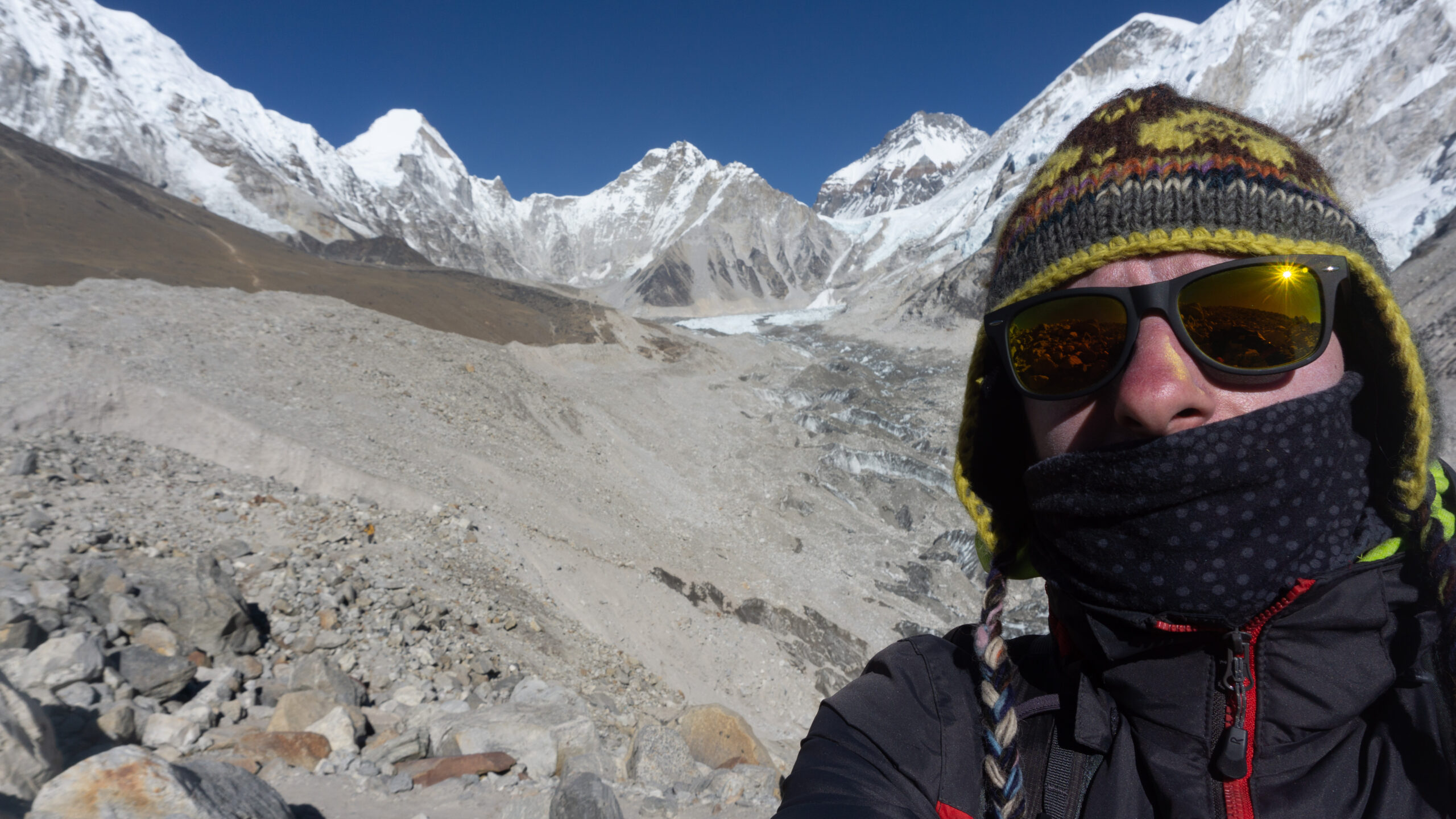
While it is a common misconception that you can see the summit of Mount Everest from base camp itself the massive shoulder of Nuptse actually blocks the peak, the view you do get is perhaps even more dramatic. You are positioned at the very foot of the notorious Khumbu Icefall, a frozen river of towering ice seracs and deep crevasses. Standing there, surrounded by the giants of the Himalaya, provides an overwhelming sense of scale and a deep connection to mountaineering history. It is an unforgettable moment of clarity where the sheer magnitude of the world’s highest mountain finally sinks in.
Best Time to Visit Mount Everest
The best seasons to visit Mount Everest are:
- Spring (March–May): Clear skies, stable weather, blooming rhododendrons
- Autumn (September–November): Crisp air, excellent mountain views, peak trekking season
Winter is cold but quiet, while the monsoon season brings rain, clouds, and flight delays.
Everest Region Weather and Flights: Complete Guide for Travelers
Planning a trip to the Everest region? Understanding the weather conditions and Lukla flights is essential for a safe and successful journey to Everest Base Camp or beyond.
Weather in the Everest Region
The weather in the Everest region changes dramatically with altitude and season. From Lukla (2,860 m) to Everest Base Camp (5,364 m) and above, conditions can shift quickly within hours.
Spring (March–May) – Best Season for Climbing
- Clear skies and stable weather
- Moderate temperatures at lower altitudes
- Rhododendron forests in bloom
- Ideal for Everest expeditions and trekking
Spring is the most popular time for Mount Everest climbing, as summit windows typically open in May.
Summer / Monsoon (June–August)
- Frequent rain at lower altitudes
- Cloudy skies and limited mountain views
- Lukla flight delays common
- Fewer trekkers
Not ideal for Everest Base Camp trekking due to slippery trails and poor visibility.
Autumn (September–November) – Best for Trekking
- Crystal-clear mountain views
- Stable weather and dry conditions
- Comfortable daytime temperatures
- Peak trekking season
Autumn is perfect for Everest Base Camp Trek, Gokyo Lakes, and Three High Passes Trek.
Winter (December–February)
- Very cold temperatures (-15°C to -25°C at higher camps)
- Clear skies but strong winds
- Fewer crowds
- Some teahouses close at high altitude
Winter trekking is possible but requires proper cold-weather preparation.
Flights to Everest Region (Lukla Airport Guide)
Lukla Airport (Tenzing-Hillary Airport – 2,860 m)
Lukla is the gateway to Everest and one of the world’s most thrilling mountain airports.
Flight Duration
- Kathmandu to Lukla: 25–30 minutes
- During peak season, flights may operate from Ramechhap Airport (4–5 hours drive from Kathmandu)
Why Lukla Flights Get Delayed
- Sudden weather changes
- Cloud cover and poor visibility
- Strong crosswinds
- Limited runway (527 meters long)
Morning flights are more reliable because winds usually increase in the afternoon.
How Weather Affects Everest Climbers
For climbers attempting Mount Everest:
- Summit pushes depend on short “weather windows” in May
- Jet stream winds above 8,000 m can exceed 150 km/h
- Temperatures in the Death Zone can drop below -30°C
- Oxygen levels are only one-third of sea level
Careful weather forecasting is critical for summit success.
Travel Tips for Everest Visitors
✔️ Always keep 1–2 buffer days for flight delays
✔️ Travel in spring or autumn for best weather
✔️ Purchase travel insurance covering flight cancellation
✔️ Start flights early in the morning
✔️ Stay flexible with your itinerary
Why Weather and Flights Matter in Everest Travel
The Everest region is one of the most beautiful yet unpredictable places on Earth. Understanding seasonal weather patterns and Lukla flight conditions helps ensure a smooth trekking or climbing experience.
Whether you are planning the Everest Base Camp Trek or a full Mount Everest expedition, preparation is the key to success in the Himalayas.
Mastering the Altitude: Difficulty and Fitness for the Everest Base Camp Trek
One of the most common questions for aspiring adventurers is: “How hard is the Everest Base Camp trek?” While the journey is a formidable challenge, it is surprisingly accessible to those who prepare correctly. Unlike mountaineering expeditions, a trek to EBC is a “teahouse trek” that requires no technical climbing skills, ropes, or ice axes. However, it is a test of endurance that demands a solid level of physical and mental preparation.
Physical Fitness: Preparing Your Body
While you don’t need to be an elite athlete, your cardiovascular health is paramount. You will be trekking for 5 to 8 hours a day over rocky, undulating terrain. To enjoy the experience rather than just “surviving” it, we recommend a training regimen starting 2–3 months before your departure. Focus on:
- Cardio Training: Hiking, swimming, or cycling to build lung capacity.
- Leg Strength: Squats and lunges to prepare for steep Himalayan “flat” (which locals joke is just a series of ups and downs).
- Stair Climbing: There is no better way to mimic the stone steps of the Khumbu than by hitting the stairs with a weighted daypack.
Navigating Altitude and Acclimatization
The greatest challenge of the Everest region isn’t the distance; it’s the thinning air. As you ascend, the oxygen levels drop significantly, making Acute Mountain Sickness (AMS) a real concern. This is why a professional itinerary includes mandatory “acclimatization days,” usually in Namche Bazaar and Dingboche.
The secret to reaching 5,364 meters safely is a philosophy the locals call “Bistari, bistari” (slowly, slowly). By maintaining a steady, relaxed pace and staying hydrated, you allow your body to produce more red blood cells to carry oxygen. Remember, EBC is a marathon, not a sprint those who rush are often the ones who have to turn back.
Essential Safety Tips for Success
- Hydration is Key: Aim to drink 4–5 liters of water daily to help your blood flow better at high altitudes.
- Listen to Your Body: Headaches and dizziness shouldn’t be ignored. Always communicate openly with your guide.
- Pack for the Cold: Fitness won’t help if you’re shivering; high-quality layers are essential for maintaining your core temperature as you climb higher.
Permits and Trekking Costs
To trek in the Everest region, you need:
- Sagarmatha National Park Permit
- Khumbu Pasang Lhamu Rural Municipality Permit
Costs vary depending on trekking style. Budget treks, guided treks, and luxury lodges are all available, making Everest accessible to different types of travelers.
Heart of the Himalayas: Discovering Sherpa Culture and Local Traditions
Beyond the towering peaks and glacial moraines, the true soul of the Everest region lies in the Khumbu’s Sherpa heritage. The Sherpa people are world-renowned not just for their legendary strength and mountaineering prowess, but for their profound hospitality and a lifestyle deeply rooted in Tibetan Buddhism. For any travellers, the trek is as much a cultural pilgrimage as it is a physical challenge.
A Journey Through Living Traditions
As you navigate the stone-paved trails, you are constantly reminded of the local faith. You will encounter beautifully carved mani stones (prayer stones) and vibrant prayer wheels at every village entrance. Tradition dictates that you always pass these monuments on the left side, a gesture of respect that keeps you in harmony with the local spiritual flow.
One of the most profound experiences on the trail is a visit to Tengboche Monastery. Perched on a high ridge at 3,867 meters, this ancient site is the spiritual heart of the Khumbu. Visitors are often welcome to witness the evening prayers, where the deep hum of chanting monks and the scent of juniper incense create an atmosphere of incredible peace.
Life Above the Clouds
The Sherpa way of life is a masterclass in adaptation. In villages like Namche Bazaar and Khumjung, you’ll witness a lifestyle shaped by the harsh mountain environment. From the iconic yak caravans transporting essential supplies to the high-altitude potato farms, every aspect of daily life is a testament to human resilience. Staying in local teahouses allows you to experience this firsthand, sitting around a central yak-dung-fired stove, sharing stories, and tasting traditional Sherpa stew (Syakpa).
By trekking through the Khumbu, you aren’t just a spectator of the mountains; you become a guest of a culture that has treated these peaks as sacred for centuries
Accommodation and Food on the Trek
Everest treks use tea houses, offering simple but comfortable rooms. Meals include dal bhat, noodles, soups, potatoes, and Tibetan bread. Facilities become basic at higher altitudes, but the warmth of local hospitality remains constant.
From Lush Forests to Glacial Deserts: Wildlife and Natural Wonders
The Everest region is protected within the Sagarmatha National Park, a UNESCO World Heritage Site that boasts some of the most dramatic ecological transitions on Earth. As you ascend, you move through a living vertical museum. The journey begins in the lower reaches among lush rhododendron and pine forests, where you might spot the elusive Himalayan Thar (a mountain goat) or the colorful Danphe (Nepal’s national bird). If you’re incredibly lucky, you may even find traces of the rare Snow Leopard or the Musk Deer.
As you climb higher, the greenery gives way to a stark, “moon-like” alpine desert. Here, the landscape is dominated by the massive Khumbu Glacier, deep icy valleys, and towering seracs. This transition from vibrant life to high-altitude wilderness is a sensory experience that defines the beauty of the Himalayas. And of course, you will share the trail with the iconic Himalayan Yak the sturdy, shaggy engines of the Khumbu that have transported goods through these valleys for generations.
Navigating the Challenges: Weather, Crowds, and Ethics
While the trek is life-changing, it does come with logistical hurdles. The most famous is the flight to Lukla, where mountain weather can often cause delays. Flexibility is key; we always recommend building a “buffer day” into your itinerary. Additionally, during the peak seasons (Spring and Autumn), the main trails can become crowded. Choosing an experienced guide can help you navigate these crowds by timing your daily departures strategically.
Sustainable Trekking: Being a Responsible Traveler
As tourism in the Everest region grows, so does our responsibility to protect it. To ensure these trails remain pristine for the next generation of adventurers, we advocate for Responsible Tourism:
- Leave No Trace: Everything you carry in, you must carry out.
- Plastic-Free Trekking: Use refillable water bottles and purification tablets or filters instead of buying single-use plastic bottles, which are difficult to dispose of in the mountains.
- Support the Local Economy: Dine in local teahouses and purchase handmade crafts from village artisans to ensure your tourism dollars directly benefit the community.
By trekking mindfully, you aren’t just visiting the Himalayas; you are helping to preserve their magic.
Everest for Climbers
Mount Everest (8,848.86 m) is the ultimate challenge for mountaineers and demands serious high-altitude experience, physical training, mental strength, and proper expedition permits. The most popular route is the South Col Route from Nepal, first climbed by Sir Edmund Hillary and Tenzing Norgay in 1953.
Reaching the Top of Everest
Standing on the summit of Everest at 8,848.86 meters (29,031 ft) is the dream of every climber. The final push to the top usually begins from Camp 4 (South Col) around midnight, climbing through the Balcony (8,400 m), South Summit (8,749 m), and the famous Hillary Step area, before reaching the world’s highest point. The summit day can take 8–14 hours up and 4–6 hours down, depending on weather and traffic.
The Journey Begins: Everest Base Camp to Camp 1
The expedition officially kicks off at Everest Base Camp (5,364 m), a bustling high-altitude village where climbers spend several weeks training and acclimatizing. This is the foundation of the journey, where the body begins its slow adaptation to the thin air. The first major hurdle is the trek to Camp 1 (6,065 m), which typically takes 5 to 7 hours. This leg requires navigating the notorious Khumbu Icefall a labyrinth of shifting ice, deep crevasses, and vertical ladder crossings that remains one of the most dangerous sections of the entire climb.
Entering the Western Cwm: Camp 1 and Camp 2
From Camp 1, a relatively shorter 2 to 3-hour trek leads climbers through the Western Cwm to Camp 2 (6,400 m), also known as Advanced Base Camp. While the terrain here is safer than the Icefall, the “Valley of Silence” creates a unique challenge: extreme daytime heat caused by the sun reflecting off the surrounding glacial walls. Camp 2 serves as a vital hub for secondary acclimatization and is the last place where climbers can enjoy a bit of relative comfort before heading into the higher reaches of the mountain.
Scaling the Lhotse Face: The Push to Camp 3
The transition to Camp 3 (7,162 m) marks a significant increase in technical difficulty. Over the course of 4 to 6 hours, climbers scale the steep Lhotse Face, using fixed ropes and crampons to grip the hard, blue ice. At this elevation, oxygen levels drop drastically, making even simple tasks feel like a marathon. Because the camp is perched on a steep slope, sleeping becomes difficult and physical exhaustion begins to set in, signaling the start of the high-altitude struggle.
The Death Zone: Camp 4 and the South Col
The final staging ground before the summit is Camp 4 (7,900 m – 8,000 m), located on the desolate plateau of the South Col. Reached after a grueling 6 to 8-hour climb from Camp 3, this area is famously known as the “Death Zone.” Here, the air contains only a third of the oxygen found at sea level, and temperatures regularly plummet to between -30°C and -40°C. Winds are fierce and unrelenting, allowing climbers only a few hours of restless “rest” and supplemental oxygen before they begin their final midnight push.
The Ultimate Goal: The Summit Push
The journey from the South Col to the Summit (8,848.86 m) is the ultimate test of human endurance, usually taking between 8 to 14 hours of continuous climbing. When combined with the necessary acclimatization rotations, the entire expedition spans roughly 45 to 60 days. It is a slow, methodical game of patience, where success depends entirely on the mountain’s weather windows and the climber’s mental resilience.
Difficulties and Challenges
- Khumbu Icefall: Moving glaciers and falling ice blocks
- Extreme altitude: Risk of AMS, HAPE, and HACE
- Unpredictable weather: Sudden storms and jet stream winds
- Death Zone: Body cannot acclimatize above 8,000 m
- High cost: Everest expeditions can cost $40,000–$70,000+
- Mental pressure: Fatigue, fear, and decision-making under stress
Climbing Everest is not just about physical strength it is about endurance, patience, teamwork, and respect for the mountain. Reaching the summit is a lifetime achievement, but returning safely is the true success of every expedition
Capturing the Giants: Top Photography Spots and Viewpoints
For many, an Everest trek is a quest for the ultimate photograph. The Khumbu is a high-altitude studio where the light, scale, and sharp Himalayan air create a photographer’s paradise. Whether you are a professional with a DSLR or a traveler with a smartphone, these iconic viewpoints offer the most breathtaking vistas in the world.
The Best Viewpoints for Mount Everest
While the trail is beautiful at every turn, these specific spots are legendary for their unobstructed panoramas:
- Kala Patthar (5,545m): Often called the “photographic summit” of the EBC trek, this is the premier spot for sunset. From here, you get a close-up, face-to-face view of Mount Everest’s summit, flanked by Nuptse and Lhotse.
- Gokyo Ri (5,357m): For many, this is the superior view. You can see four 8,000-meter peaks (Everest, Lhotse, Makalu, and Cho Oyu) while the turquoise Gokyo Lakes sparkle below.
- Nangkartshang Peak (5,083m): Located above Dingboche, this “acclimatization hike” offers a stunning vertical perspective of Ama Dablam, often considered the most beautiful mountain in the world.
- Tengboche (Tyangboche): The view from the monastery courtyard with prayer flags framing the tip of Everest is one of the most spiritual and iconic shots in the Himalayas.
- Namche Bazaar: The amphitheater-like shape of the Sherpa capital, especially when lit up at night, makes for incredible blue-hour photography.
Chasing the Light: Sunrise and Sunset
The secret to “magazine-quality” photos in the Everest region is timing. During sunrise and sunset, the peaks undergo a transformation known as Alpenglow, where the white snow turns into shades of fiery orange and deep violet.
- Pro Tip: For sunrise, head to Nangkartshang or Gokyo Ri. For sunset, Kala Patthar is unbeatable as the sun dips behind the western peaks, casting a golden glow directly onto Everest’s face.
Why Mount Everest is More Than Just a Destination
For many, the trek to Mount Everest is a line on a bucket list or a quest for a world record. But for those who have walked its rugged trails, the experience proves to be something far deeper. Mount Everest is not just about the altitude or the prestige of its height; it is a profound lesson in humility, resilience, and human connection. It is a place where the scale of nature reminds us of our place in the world, and the strength of the local Sherpa culture teaches us the value of community and faith.
A Transformation of the Soul
Whether you choose the iconic Everest Base Camp trek, navigate the serene turquoise waters of the Gokyo Lakes,, three high passes Everest trek, Everest Panorama trek or challenge yourself on the high mountain passes, the Khumbu leaves a lasting mark on your soul. The thin air and steep climbs strip away the distractions of modern life, leaving you with a sense of clarity that is hard to find anywhere else on Earth. You don’t just visit Everest; you experience it through every breath and every step.
Discover Your “Higher Self”
If the Himalayas are calling you, it is about more than just seeing the world’s highest peak. It is an invitation to step out of your comfort zone and test your limits. A journey to the Everest region is an invitation to discover a higher version of yourself. You will return home not just with photos of snow-capped peaks, but with a newfound resilience and a deeper appreciation for the natural world.


