

Mother’s Day in Nepal 2026
While much of the world celebrates Mother’s Day on a date imported from commercial calendars, Mother’s day in Nepal is named as “Matatirtha Aunsi”, which is ancient, indigenous, and deeply sacred. It falls on the new moon day (Aunsi) of the Nepali month of Baisakh (April–May), a date determined not by Hallmark but by the lunar calendar that has guided Himalayan life for millennia. In 2026, Nepali Mother’s Day (Mata Tirtha Aunsi) falls on April 17 in AD, which corresponds around Baisakh 4, 2083 BS.
The word Matatirtha itself tells you everything. Mata means mother. Tirtha means a sacred pilgrimage site, a place where the earthly world meets the divine. Together, the name declares that the mother is a pilgrimage destination. The holiest place a person can return to.
This is not a modern holiday. The tradition stretches back centuries, woven into the Hindu and Buddhist tapestry that blankets this Himalayan nation predating any Western version of Mother’s Day by generations.
The Legend Behind the Sacred Pond
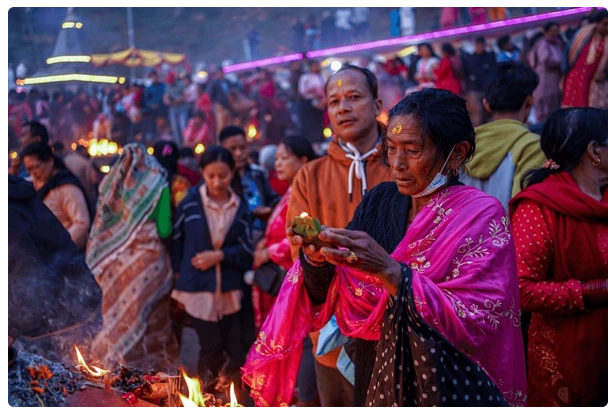
At the heart of Matatirtha Aunsi lies a legend as old as grief itself. A young man loses his mother and, overcome with sorrow, wanders into the forests southwest of Kathmandu. Exhausted and weeping, he stumbles upon a small pond. When he gazes into its still surface, he sees not his own reflection but his mother’s face, looking back at him with love.
That pond is Matatirtha Kunda, nestled about 12 km from Kathmandu in the forested hills that now carry this name. The site became a place of pilgrimage for all those who have lost their mothers, and for those who wish to honour the ones still living.
Every year on this day, thousands of Nepali families walk to Matatirtha at dawn, bathe in or offer water at the pond, light butter lamps, and perform Shraddha rituals for deceased mothers reciting prayers so their spirits may find peace. The belief is profound: on this one day, the veil between the living and the dead grows thin, and a mother’s soul can receive her family’s love directly.
How Mother’s Day in Nepal is celebrated: Deeper Than a Greeting Card
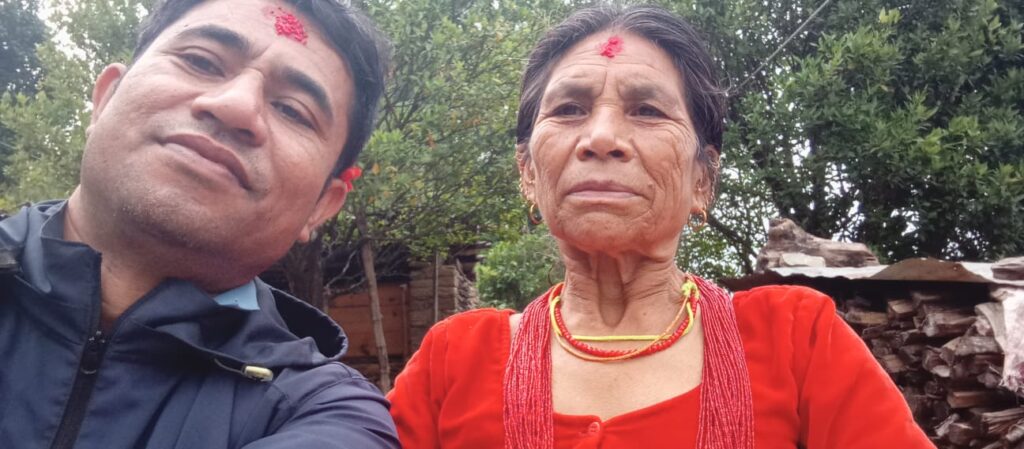
The pilgrimage walk. Families set out before sunrise for Matatirtha Kunda on foot, by vehicle, sometimes both to bathe, offer flowers, and pray. For those whose mothers have passed, this walk is a form of grief made sacred.
Marigold garlands. Children drape their mothers in (sayapatri) the golden marigold, Nepal’s flower of devotion. By sunrise, every street corner in Kathmandu has flower sellers piling blooms into garlands. The air itself smells like love.
Sel roti and sweets. Families gift clothes, sweets, and (selroti) a sacred ring-shaped rice bread fried at home. Its circular form is no accident: it symbolises the cycle of life, the continuity of a mother’s love passing from generation to generation.
Tika and blessings. Mothers place red tika on their children’s foreheads — a blessing of long life and protection that has been passed down in this form for hundreds of years.
Tarpan, the water ritual. Those who have lost their mothers offer water, flowers, and sesame seeds at riverbanks and sacred ponds — the ritual of tarpan — to nourish the spirit’s continued journey beyond this life.
The family feast. Extended families gather, and grandmothers sit at the centre of the table — not as guests, but as roots. The food comes from their recipes. The laughter comes from their stories.
Aama in Nepali Culture: The First Holy Place
To understand Matatirtha Aunsi, you must first understand how Nepal sees the mother. She is not just a parent in Nepali culture, she is a living goddess. Hindu tradition venerates the Devi, the divine feminine, and Nepali culture extends this reverence directly into daily family life.
The ancient Sanskrit saying “Mata, Pita, Guru, Deivam” — mother, father, teacher, god — places the mother first, before even the divine. In Nepal, this is not a proverb quoted at ceremonies. It is practised. A Nepali child touches their mother’s feet every morning. Her blessing before a journey is considered essential for safe passage through mountain trails.
Even the mountains carry this reverence. The Nepali people call the Earth herself Dharti Aama — Mother Earth. The great Himalayan peaks are not merely geological formations; they are sacred entities that shelter, feed rivers, and guide the seasons. Everest is spoken of with the same awe reserved for the divine. To walk in the Himalayas is, in a very real sense, to walk in the embrace of Aama.
This philosophy shows up on every trekking trail. When a weary trekker receives warm dal bhat at a mountain teahouse from an elderly Aama, the meal is never just food. It is an act of maternal care the universal gesture of a mother feeding her children, recreated ten thousand feet above the sea.
The Mountain Path Is a Mother’s Path
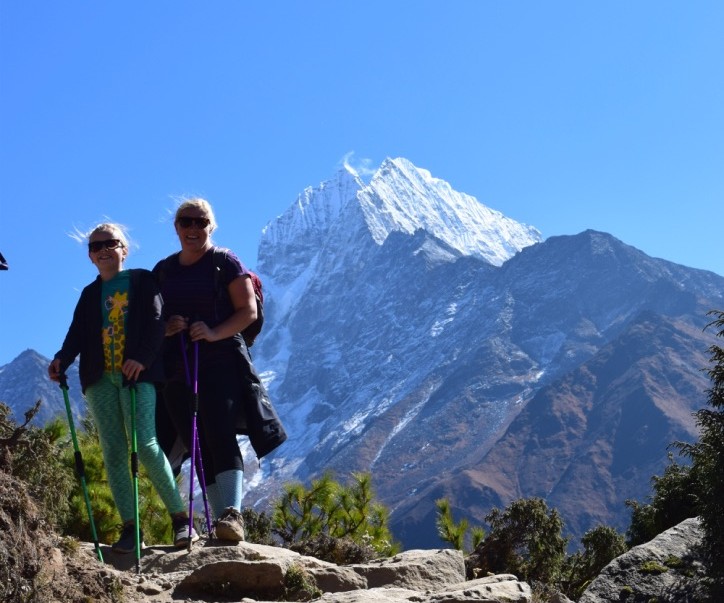
The trails of Nepal were built and maintained by mountain communities in which women are the backbone. In villages like Namche Bazaar, Ghorepani, and Langtang, it is often the grandmother “Hajurama” who is the keeper of local wisdom: which trail floods after rain, where the medicinal herbs grow, when the rhododendrons will bloom on the high passes.
Visiting Nepal during Matatirtha Aunsi offers travellers something increasingly rare: the chance to witness a culture where love for the mother is not a sentiment — it is a pilgrimage taken seriously, in real weather, on real roads, by people for whom devotion is as natural as breathing.
You may arrive in Kathmandu and find the city waking early, softened by incense smoke and the colour of marigolds. You may see a son carrying flowers to offer at a temple while his elderly mother waits at home. You may see a woman weeping quietly at the edge of Matatirtha Kunda, speaking words to the water meant for someone no longer here. These are not tourist performances. This is Nepal, unfiltered.
Trekking as an Act of Gratitude
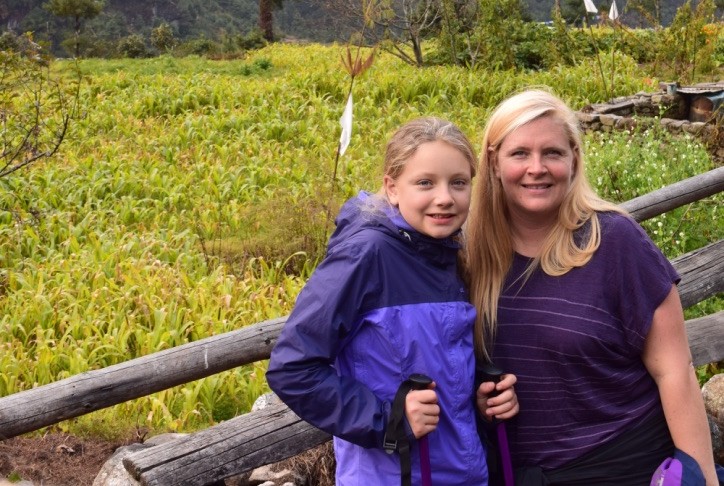
Many of our guests tell us that their trek through Nepal changed how they see their own mother. There is something about walking in silence under enormous peaks dependent on your body, humbled by altitude and distance that strips away the noise of ordinary life and returns you to the essential questions: Who cared for you? Who carried you when you could not carry yourself?
Some choose to dedicate their Himalayan trek to their mother, living or gone. Some bring a photograph and leave it at a mountain pass adorned with prayer flags, trusting the wind to carry their love wherever it needs to go. In Nepal, that does not seem unusual. It seems exactly right.
If you have ever wanted to honour your mother in a way that goes beyond flowers or a restaurant booking come walk with us. Walk through the home of the world’s highest mountains, on the land that has always known that the mother is the first and highest holy place there is.
Plan Your Visit: The Best Season, the Best Reason
Matatirtha Aunsi falls in late April or early May — one of the finest trekking seasons in Nepal, just before the monsoon arrives. The skies are clear, rhododendrons bloom red and pink on the hillsides, and the Himalayan views are at their most spectacular.
If you are in Kathmandu on this day, plan an early morning visit to Matatirtha Kunda (about 12 km from Thamel). Go before 9 AM, dress modestly, and simply observe with respect. Locals are warm and welcoming to visitors who approach with genuine curiosity and reverence.
Our spring treks departing in late April and May are available for booking. Ask our team about combining a cultural Kathmandu day including Matatirtha with the beginning of your mountain journey. Start where devotion lives. Carry it with you into the peaks.
“Aama ko mukhma raamro”, May goodness always be upon the mother’s face. An old Nepali blessing, spoken on this day across every valley in these mountains.
Happy Matatirtha Aunsi from our mountains to your heart!!

