


Nepal’s 10 UNESCO World Heritage Sites
For a country of its size, Nepal possesses one of the richest concentrations of UNESCO World Heritage Sites anywhere in Asia. From sacred Hindu temples and enormous Buddhist stupas to medieval royal squares and breathtaking natural wilderness, these sites together tell the story of a nation shaped by faith, artistry, resilience, and an extraordinary relationship with nature.
Nepal currently has ten UNESCO World Heritage Sites, eight cultural sites and two natural heritage sites. Each offers something completely different. Some immerse you in centuries-old spiritual traditions. Others place you face-to-face with the highest mountains on Earth or deep inside subtropical jungles filled with rhinos and Bengal tigers.
This guide is designed to be more than a checklist. It is a complete travel experience covering what makes each site important, what you should not miss, how each place feels emotionally, the best time to visit, practical travel advice, photography opportunities, local cultural etiquette, and the deeper stories behind Nepal’s greatest heritage destinations.
Whether you are planning your first trip to Nepal or returning to explore beyond the usual tourist route, this guide will help you experience Nepal’s UNESCO heritage sites in a meaningful and unforgettable way.
Why Nepal’s UNESCO Heritage Sites Are So Special?
In many parts of the world, historical sites are preserved behind barriers and visited mainly for sightseeing. In Nepal, heritage continues to function as part of daily life.
At Kathmandu Durbar Square, local vendors still gather beside temples where kings once ruled. In Bhaktapur, artisans continue traditional pottery and woodcarving techniques that are hundreds of years old. At Boudhanath, monks circle the giant stupa every morning spinning prayer wheels and chanting mantras as they have done for generations. At Pashupatinath, cremation ceremonies take place beside the sacred river not for tourism, but because the site remains one of the holiest spiritual centers in South Asia.
This sense of continuity gives Nepal a cultural atmosphere unlike almost anywhere else in the world. The country’s UNESCO sites are not disconnected from modern life. They are woven directly into it. And beyond culture, Nepal’s natural UNESCO sites reveal landscapes that feel almost unreal in scale and beauty. Sagarmatha National Park protects Mount Everest and some of the highest terrain on Earth, while Chitwan National Park preserves one of Asia’s most important jungle ecosystems. Together, these places represent the soul of Nepal.
The 8 UNESCO Cultural World Heritage Sites of Nepal
1. Kathmandu Durbar Square: The Historic Heart of Nepal
Best For:
History lovers, photographers, cultural travelers, architecture enthusiasts, first-time visitors
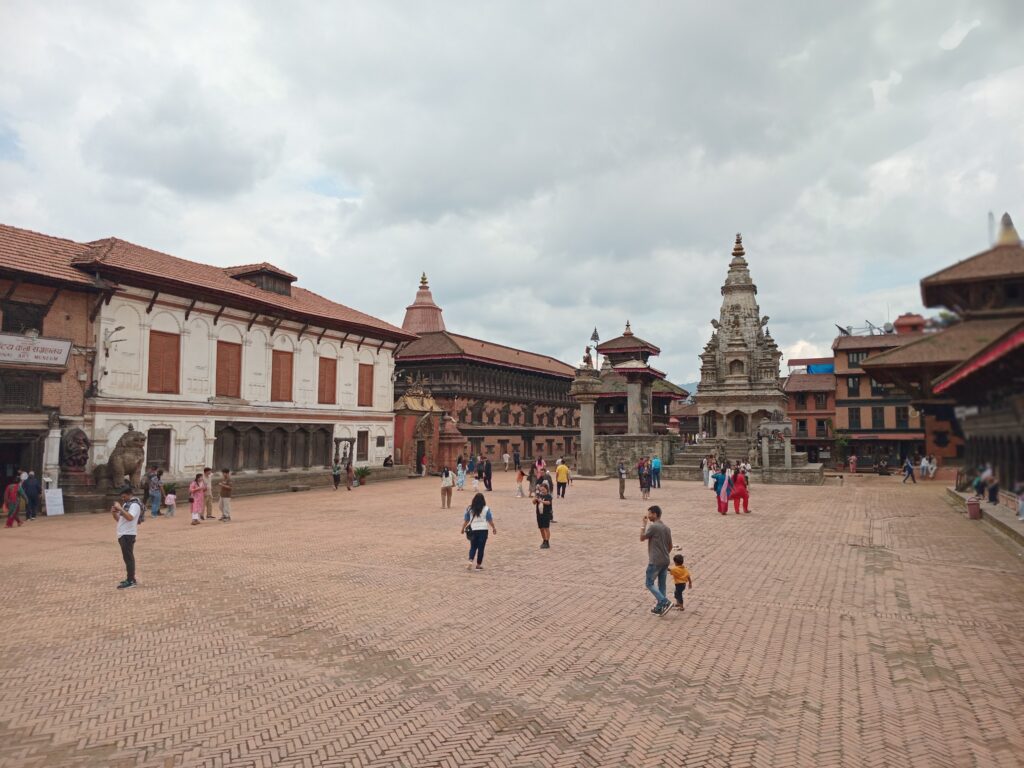
Kathmandu Durbar Square is one of the most iconic heritage sites in Nepal and often the first cultural landmark travelers experience after arriving in the capital. Located in the center of old Kathmandu, the square once served as the royal palace complex of the Malla kings who ruled the Kathmandu Valley between the 12th and 18th centuries. Today, it remains one of the most fascinating cultural spaces in South Asia.
Walking through Kathmandu Durbar Square feels like entering a living museum. Temples rise beside crowded alleyways. Pigeons circle above shrines covered in marigold flowers and incense smoke. Local people stop for prayer before work while tourists photograph centuries-old architecture only a few meters away.
The square contains an extraordinary collection of pagoda temples, palaces, courtyards, shrines, and intricately carved wooden buildings representing the highest achievements of traditional Newari craftsmanship. The artistry here is remarkable. Wooden windows display detailed carvings of gods, mythical creatures, and geometric patterns. Temple roofs stack elegantly upward in the classic Nepali pagoda style that later influenced architecture across Asia.
One of the most famous attractions is Kumari Ghar, home of Nepal’s Living Goddess. The Kumari is a young girl believed to embody the goddess Taleju. Chosen through ancient traditions, she lives inside the palace-like residence overlooking the square. Occasionally, she appears briefly at one of the carved windows to bless visitors. The experience is deeply unique to Nepal and remains one of the country’s most fascinating living traditions.
Highlights
- Kumari Ghar (House of the Living Goddess)
- Hanuman Dhoka Palace Complex
- Taleju Temple
- Traditional Newari woodcarving
- Kasthamandap Temple
- Ancient courtyards and shrines
Best Time to Visit
Visit early in the morning or around sunset for softer light, fewer crowds, and a more peaceful atmosphere.
October to December and March to May offer the clearest weather conditions.
Travel Tip
Return after dusk.
As evening prayers begin and butter lamps flicker inside temple niches, Kathmandu Durbar Square transforms from a busy tourist attraction into something deeply spiritual and atmospheric.
2. Patan Durbar Square: Nepal’s Finest Artistic Treasure
Best For:
Art lovers, architecture enthusiasts, café culture, museum visitors, slow travelers
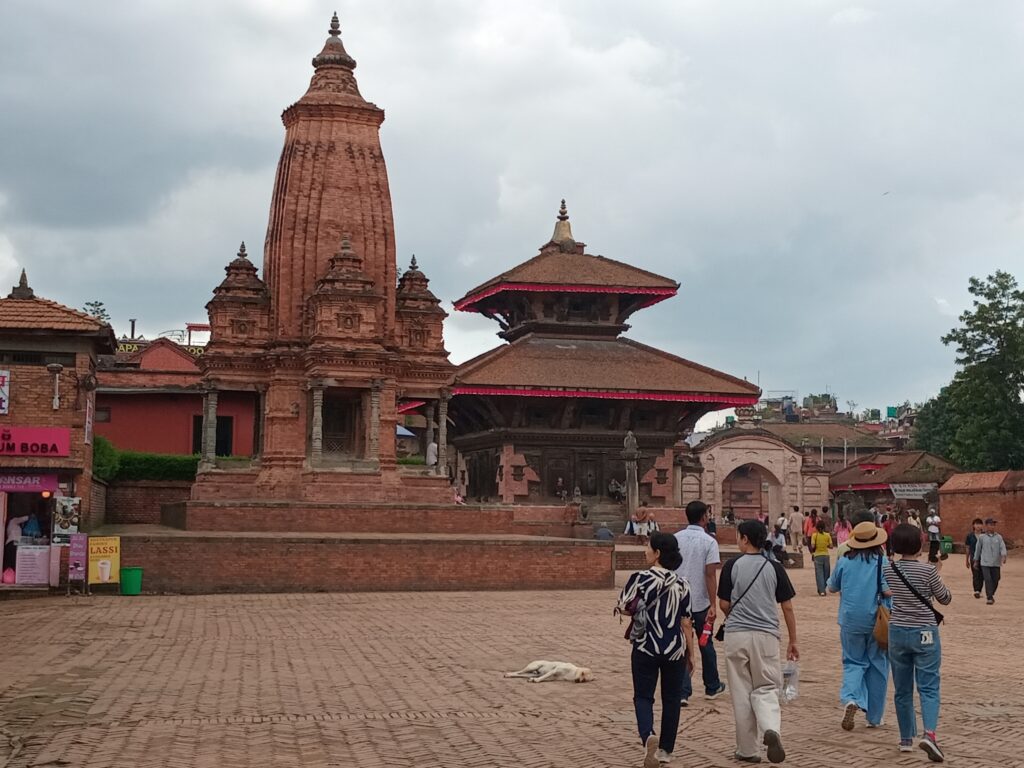
Just south of Kathmandu lies Patan, also known as Lalitpur, meaning “City of Beauty.” Many travelers consider Patan Durbar Square the most elegant and refined heritage site in Nepal. Compared to Kathmandu Durbar Square, Patan feels calmer, more balanced, and artistically polished. The temples are beautifully proportioned, the courtyards more spacious, and the bronze and stone artwork exceptionally detailed.
Patan has been a center of craftsmanship for centuries. The city remains famous for bronze casting, metalwork, woodcarving, and traditional religious art. Walking through the narrow lanes around the square, visitors can still observe artisans creating Buddhist statues, painting thangkas, and crafting handmade sculptures using techniques passed down through generations.
The architectural centerpiece of the square is Krishna Mandir, a magnificent stone temple dedicated to Lord Krishna. Unlike most Nepali temples built primarily from wood and brick, Krishna Mandir is constructed entirely from stone and features stunning carvings from Hindu epics including the Mahabharata and Ramayana.
Another major attraction is the Patan Museum, widely considered one of the best museums in South Asia.Housed inside the former royal palace, the museum offers an in-depth look into Nepalese religious art, Buddhist symbolism, Hindu iconography, and traditional craftsmanship.
Highlights
- Krishna Mandir
- Patan Museum
- Bhimsen Temple
- Golden Temple (Hiranya Varna Mahavihar)
- Traditional artisan workshops
- Beautiful Newari courtyards
Best Time to Visit
Spring and autumn provide the best weather conditions. Late afternoon is ideal for photography and rooftop café views overlooking the square.
Travel Tip
Spend time exploring the side alleys. Some of Patan’s most beautiful hidden courtyards, artisan workshops, and small monasteries are located away from the main square.
3. Bhaktapur Durbar Square: Nepal’s Living Medieval City
Best For:
Photography, cultural immersion, traditional food, architecture, slow travel Bhaktapur feels different from anywhere else in Nepal. Located east of Kathmandu Valley, this ancient city has preserved much of its medieval atmosphere and traditional lifestyle. Brick streets wind through temple squares, pottery courtyards, and quiet residential neighborhoods where local traditions remain deeply rooted.
Unlike Kathmandu, Bhaktapur has developed more slowly and avoided much of the rapid modernization visible elsewhere in the valley. That slower pace gives the city extraordinary charm. The city was once one of the most powerful kingdoms in the Kathmandu Valley during the Malla era. Today, it remains famous for its architecture, pottery, woodcarving, and traditional Newari culture.
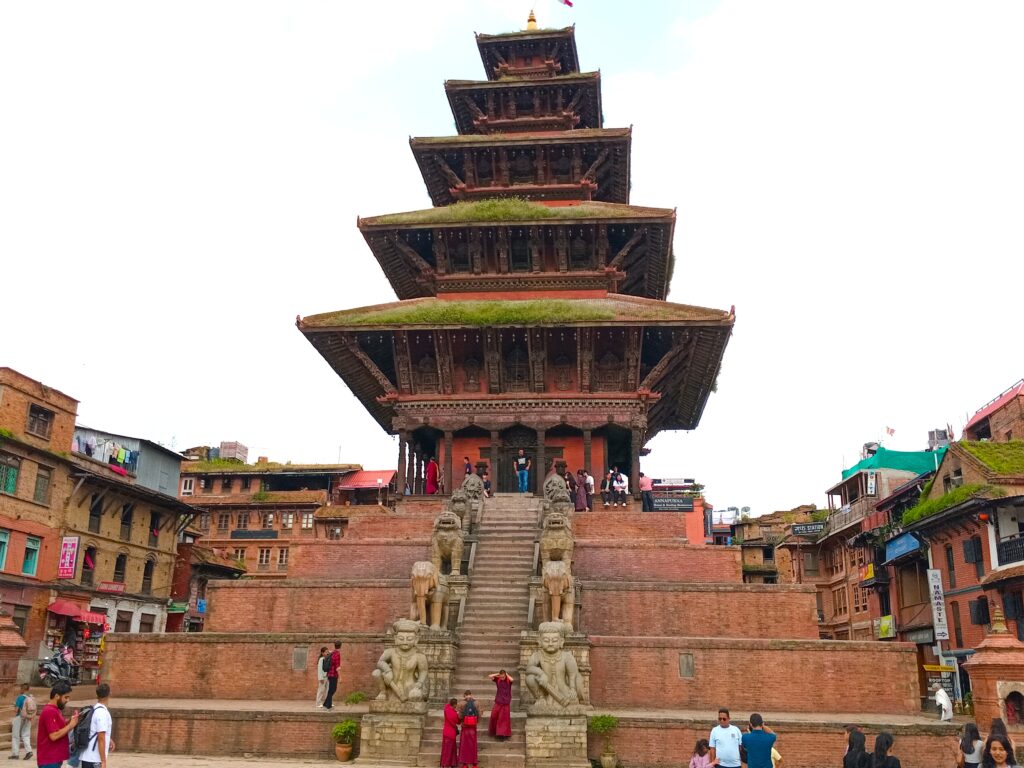
One of the city’s greatest landmarks is Nyatapola Temple. Standing five stories high, it is the tallest pagoda-style temple in Nepal and one of the few major monuments that survived the 2015 earthquake with minimal damage. Nearby, the 55-Window Palace showcases some of the finest examples of traditional Newari woodcarving ever created.
Bhaktapur is also one of the best places in Nepal to experience local food. The city’s famous Juju Dhau, or “King Curd,” is a rich and creamy yogurt made from buffalo milk using traditional methods.
Highlights
- Nyatapola Temple
- 55-Window Palace
- Pottery Square
- Dattatreya Square
- Juju Dhau (King Curd)
- Traditional Newari streets and courtyards
Best Time to Visit
October to April offers excellent weather and comfortable temperatures.
Travel Tip
Stay overnight if possible. Most tourists visit Bhaktapur during the day, but the city becomes quieter and far more magical in the evening once the crowds leave.
4. Swayambhunath: The Famous Monkey Temple
Best For:
Sunrise views, Buddhist culture, panoramic photography, spiritual atmosphere Perched on a hilltop overlooking Kathmandu Valley, Swayambhunath is one of Nepal’s oldest and most sacred Buddhist sites.
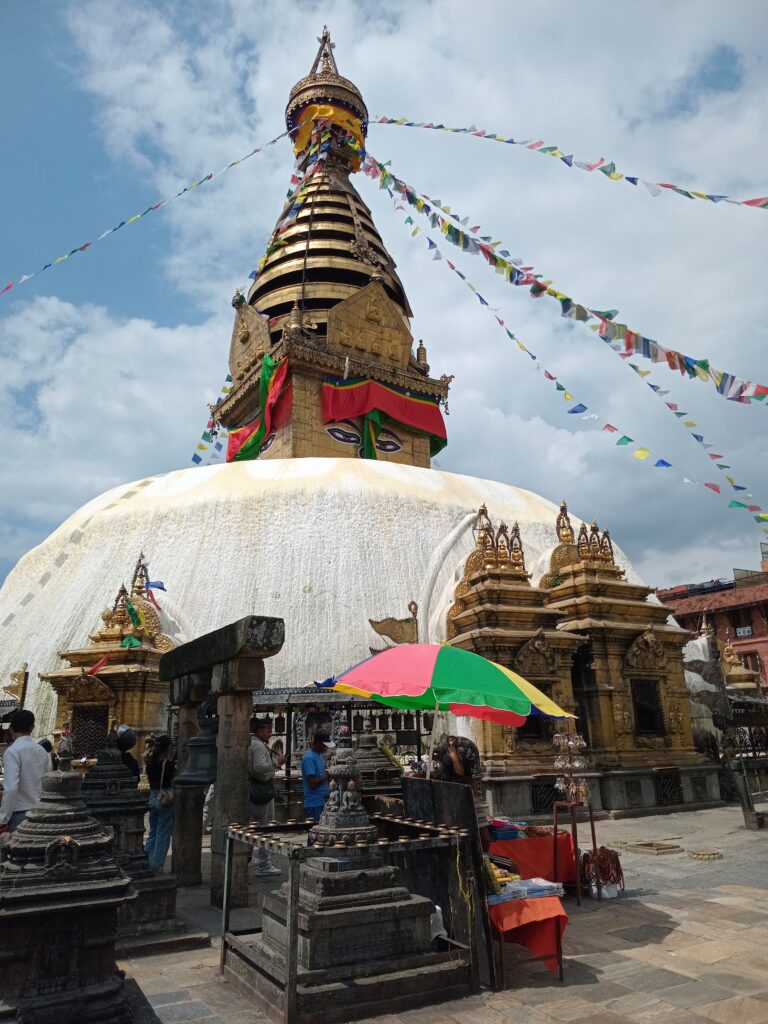
The stupa is believed to be more than 2,000 years old and remains one of the most recognizable symbols of Nepal. Visitors reach the main stupa by climbing a long staircase lined with monkeys, prayer wheels, shrines, and colorful prayer flags.
The climb itself feels symbolic. As you move upward away from the noise of the city below, the atmosphere gradually becomes calmer and more spiritual. At the summit stands the iconic white dome and golden spire with the painted eyes of Buddha gazing in all four directions.
The panoramic views from the top are spectacular, especially during sunrise and sunset when golden light spreads across Kathmandu Valley. Swayambhunath is sacred to both Buddhists and Hindus, reflecting Nepal’s remarkable religious harmony and cultural blending.
Highlights
- Ancient Buddhist stupa
- Panoramic Kathmandu Valley views
- Prayer wheels and monasteries
- Resident monkeys
- Sunrise and sunset photography
Best Time to Visit
Early morning offers the best light and the most peaceful atmosphere.
Travel Tip
Walk slowly around the stupa clockwise while spinning prayer wheels respectfully, following local tradition.
5. Boudhanath: The Spiritual Center of Tibetan Buddhism in Nepal
Best For:
Meditation, Tibetan culture, monastery visits, evening rituals, peaceful travel
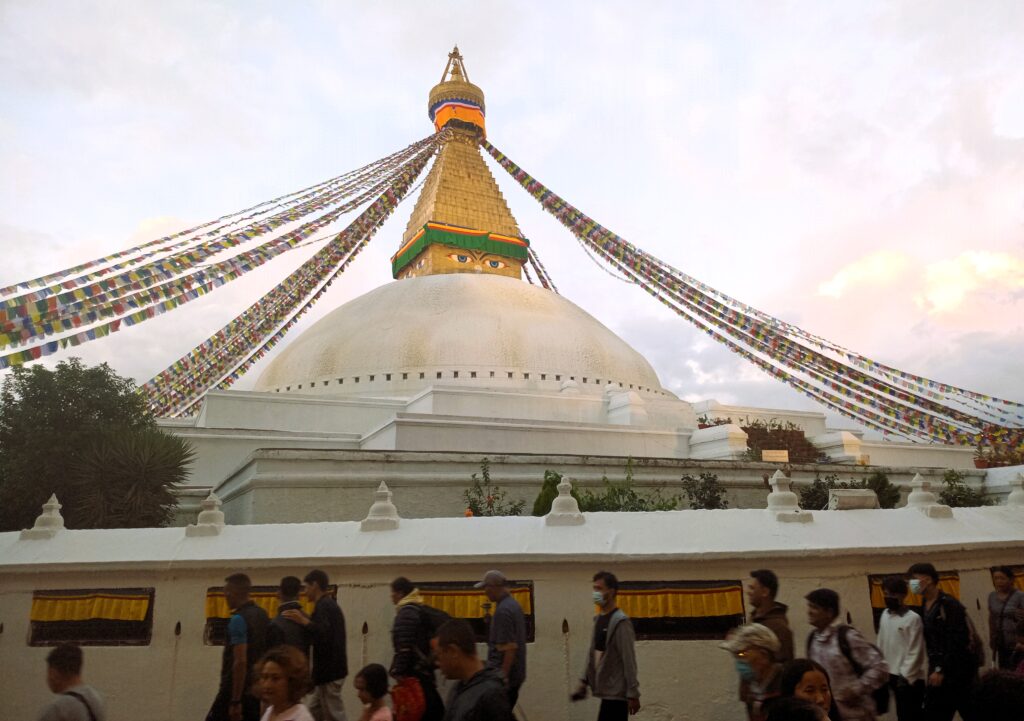
Boudhanath is one of the largest Buddhist stupas in the world and one of the most spiritually powerful places in Nepal. After the Tibetan diaspora of the mid-20th century, the area around Boudhanath became the cultural and spiritual heart of Tibetan Buddhism in Nepal.
Today, dozens of monasteries surround the stupa, creating a deeply peaceful atmosphere filled with prayer chants, spinning wheels, incense smoke, and monks in maroon robes. The stupa itself is enormous. Pilgrims continuously walk clockwise around it performing kora, a ritual circumambulation believed to generate spiritual merit.
Joining the kora in the evening as butter lamps glow around the stupa is one of Kathmandu’s most unforgettable experiences.
Highlights
- Massive spherical stupa
- Tibetan monasteries
- Evening butter lamp ceremonies
- Rooftop cafés with stupa views
- Meditation centers and Buddhist art shops
Best Time to Visit
Late afternoon and evening provide the best atmosphere.
Travel Tip
Visit a rooftop café at sunset to watch the evening rituals from above while enjoying traditional Tibetan tea or thukpa.
6. Pashupatinath Temple: Nepal’s Holiest Hindu Site
Best For:
Spiritual exploration, cultural understanding, Hindu traditions, photography
Pashupatinath is one of the most sacred Hindu temples in the world. Located beside the Bagmati River in Kathmandu, the temple complex attracts thousands of pilgrims, sadhus, and devotees every year. The atmosphere here is intense, emotional, and deeply spiritual.
The temple is dedicated to Lord Shiva and is especially significant for Hindus who believe that cremation beside the sacred river helps achieve liberation from the cycle of rebirth. The open-air cremation ghats along the riverbank are among the most powerful and confronting experiences many travelers encounter in Nepal.
While the main temple is restricted to Hindus only, non-Hindu visitors can explore the surrounding complex, observe ceremonies from across the river, and learn about Nepal’s spiritual traditions.
Highlights
- Sacred Shiva temple
- Cremation ghats
- Evening Aarti ceremony
- Hindu sadhus and pilgrims
- Ancient shrines and ashrams
Best Time to Visit
Arrive before sunset to witness the evening Aarti ceremony.
Travel Tip
Be respectful around cremation ceremonies. Avoid intrusive photography and remember these rituals are deeply personal spiritual moments for local families.
7. Changu Narayan: Nepal’s Oldest Temple
Best For:
History enthusiasts, peaceful travel, hiking, hidden cultural experiences
Changu Narayan is often overlooked by visitors, but it is one of Nepal’s most historically important heritage sites. Believed to date back to the 5th century, it is considered Nepal’s oldest surviving Hindu temple.
Dedicated to Lord Vishnu, the temple contains extraordinary stone carvings and inscriptions that reveal the artistic sophistication of early Nepalese civilization. The temple sits on a hilltop surrounded by forests and traditional villages, creating a peaceful atmosphere far removed from Kathmandu’s busy streets.
Many travelers hike to Changu Narayan from Bhaktapur through terraced farmland and rural villages, making the journey itself part of the experience.
Highlights
- Ancient stone inscriptions
- Traditional Vishnu sculptures
- Peaceful hilltop setting
- Village culture and hiking trails
Best Time to Visit
October to November and March to April offer excellent weather and clear valley views.
Travel Tip
Combine the visit with a countryside hike from Bhaktapur for a more authentic local experience.
8. Lumbini: The Birthplace of Buddha
Best For:
Spiritual travel, meditation, Buddhist history, peaceful retreats
Lumbini is one of the most important pilgrimage destinations in the world. This is the birthplace of Siddhartha Gautama, who later became the Buddha.
Located in southern Nepal near the Indian border, Lumbini feels very different from the Kathmandu Valley. The landscape is flat, quiet, and spacious, creating a calm atmosphere ideal for reflection and meditation. At the center of the site stands the Maya Devi Temple, marking the exact place where the Buddha is believed to have been born over 2,600 years ago.
Nearby, the Ashoka Pillar, erected by Emperor Ashoka in 249 BC provides historical evidence confirming Lumbini’s significance. The wider monastic zone contains monasteries built by Buddhist communities from around the world, each reflecting unique architectural styles and spiritual traditions.Cycling slowly between these monasteries is one of the best ways to experience Lumbini.
Highlights
- Maya Devi Temple
- Ashoka Pillar
- Sacred Garden
- International Monastic Zone
- Meditation retreats and Buddhist teachings
Best Time to Visit
October to March offers cooler temperatures and more comfortable conditions.
Travel Tip
Spend at least two full days in Lumbini. The site rewards slow travel and quiet exploration rather than rushed sightseeing.
Nepal’s Natural UNESCO World Heritage Sites
Sagarmatha National Park — Home of Mount Everest
Sagarmatha National Park protects some of the highest mountains and most dramatic landscapes on Earth.
Located in Nepal’s Khumbu region, the park includes Mount Everest along with glaciers, deep valleys, alpine forests, and traditional Sherpa villages.
For many travelers, trekking through Sagarmatha is a life-changing experience.
The Everest Base Camp Trek takes visitors through mountain villages, suspension bridges, Buddhist monasteries, and spectacular Himalayan scenery over approximately two weeks.
Key Highlights
- Mount Everest
- Everest Base Camp Trek
- Kala Patthar viewpoint
- Sherpa culture and monasteries
- Himalayan wildlife
Best Time to Visit
March to May and September to November provide the best trekking conditions.
Important Note
- Altitude sickness is the biggest challenge for trekkers.
- Proper acclimatization and slow trekking are essential.
Chitwan National Park: Nepal’s Wildlife Paradise
Completely different from the Himalayas, Chitwan National Park protects Nepal’s subtropical jungle ecosystem and some of Asia’s most endangered wildlife.
The park is famous for one-horned rhinoceroses, Bengal tigers, crocodiles, elephants, and extraordinary birdlife.
Jeep safaris, canoe rides, jungle walks, and birdwatching excursions allow visitors to experience the park safely while supporting important conservation efforts.
Key Highlights
- One-horned rhinoceros
- Bengal tiger habitat
- Canoe safaris
- Jungle walks
- Tharu culture and villages
Best Time to Visit
October to March offers the best weather and wildlife visibility.
Travel Tip
Choose ethical safari operators that avoid elephant riding and prioritize responsible wildlife tourism.
Final Thoughts: Why Nepal’s UNESCO Sites Matter
Nepal’s UNESCO World Heritage Sites are more than tourist attractions. They are living expressions of history, spirituality, survival, and identity. From the ancient temples of Kathmandu Valley to the peaceful monasteries of Lumbini, from Everest’s frozen glaciers to the jungles of Chitwan, these places reveal the incredible diversity packed into one small Himalayan nation.
What makes Nepal unforgettable is not only what you see.
- It is what you feel while standing there.
- The sound of monks chanting beneath prayer flags.
- The smell of incense drifting through temple courtyards.
- The silence of the Himalayas at sunrise.
- The sight of a rhino emerging from jungle grass.
- The warmth of tea shared with strangers in a mountain village.
These experiences stay with people. And perhaps that is the true meaning of heritage. Not simply preserving the past, but allowing people to continue experiencing it in the present. For travelers searching for culture, spirituality, adventure, history, wildlife, and meaningful human connection, Nepal remains one of the most extraordinary destinations on Earth.


