


Everest Base Camp Trek During Monsoon (June-September)
During the monsoon season, Khumbu Valley undergoes total transformation. Rain-soaked trees turn emerald green, waterfalls cascade down cliffs, clouds drift across deep valleys, and the Everest region becomes calm, wild, and intensely dramatic.
Most travelers are advised to visit in the autumn or spring. But few people ever discuss what occurs when the monsoon hits the Himalayas – when the crowds dissipate, the mountains disappear behind shifting clouds, and the entire trail transforms into something raw, private, and surprisingly beautiful.
The Everest Base Camp Trek during monsoon season is not the simplest of the journeys. Trails might be hazardous, flights to Lukla can be delayed, and rain becomes a daily occurrence. However, for individuals who are adaptable, experienced, and open-minded, it is one of the most memorable trekking experiences in Nepal.
This book will help you understand everything you need to know before embarking Everest base camp trek during monsoon, including weather conditions, real challenges, the beauty of the season, packing list, safety suggestions, Lukla flights, culture, prices, and whether this trip is truly for you.
Why Trek Everest Base Camp During The Monsoon?
Every year, around 40,000 trekkers visit Everest Base Camp. The bulk arrive during peak seasons (March to May and September to November), when skies are clear and paths are busy with hikers from all over the world.
However, monsoon trekking provides a very distinct Everest experience.
When June approaches, something changes.
- The crowds disappear.
- The communities became quiet.
- The valleys become deep green.
- Waterfalls appear everywhere.
- Clouds move like living walls across the mountains.
This is the Everest region’s hidden face, the one that most visitors never see.
Who Should Trek EBC in the Monsoon?
Monsoon trekking is most suitable for:
- Experienced trekkers with exceptional adaptability
- Photographers want spectacular scenery.
- Travelers seeking seclusion and calm walks.
- Budget travelers seeking off-season discounts
- Adventure enthusiasts who enjoy the unpredictable nature
- Who Should Avoid Monsoon Trekking?
Consider avoiding this season if:
- This is your first high-altitude hike.
- You require guaranteed mountain vistas.
- You follow rigorous travel timetables.
- You feel uncomfortable with the rain and muck.
- You prefer extremely predictable situations.
The basic principle is simple: monsoon trekking is about experience, not perfection.
Monsoon weather in the Everest region.
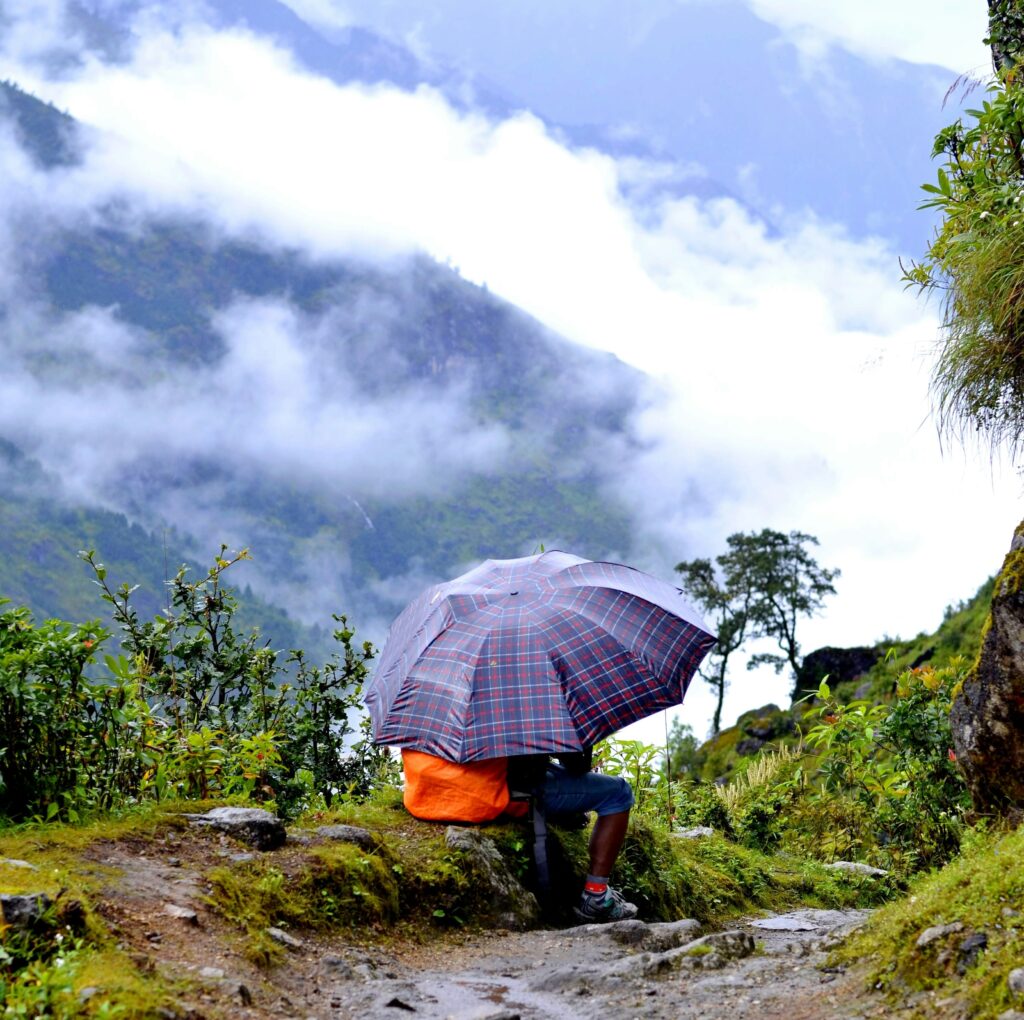
The monsoon season in Nepal lasts from late May to mid-September, when moist air from the Indian Ocean meets the Himalayas, resulting in daily rainfall patterns.
However, a crucial element is frequently overlooked:
This means that higher elevations such as Dingboche, Lobuche, and Everest Base Camp frequently receive less rainfall than lower valleys.
Typical monsoon conditions
- Lower regions (Lukla, Namche) have temperatures ranging from 10 to 20 degrees.-2 °C to 8 °C at higher altitudes.
- Afternoon rain (2 PM – 6 PM is normal).
- Most mornings are clear.
- Cloud formation after midday
Best Trekking Strategy.
Start every day at 6-7 a.m.
You will:
- Avoid rain.
- Improve visibility.
- Reach tea houses dry.
- Experience calmer paths.
The Hidden Beauty of Monsoon Everest.
The monsoon turns the Everest region into something quite different.
What You’ll See:
- Dense green trees between Lukla and Namche.
- Massive waterfalls on cliffs.
- Rapidly moving rivers and screaming suspension bridges.
- Mist-covered monasteries.
- Cloud layers wrap around mountain ridges.
- Wildflowers blossoming on paths.
Sagarmatha National Park becomes almost jungle-like – steamy, vibrant, and dramatic.
This is not “Postcard Everest.”
This is the living Everest.
The “Reveal Moment” in Monsoon Trekking
Experienced trekkers frequently describe “the reveal.”
This happens when:
- Clouds abruptly shatter.
- A snow-capped mountain appears.
- Light reaches the mountain at the ideal angle.
- Then evaporates within minutes.
During the monsoon, you may not be able to view Everest well. However, the experience is significantly more emotive than clear-sky views in peak season.
Real Challenges: Monsoon Trekking (Honest Guide)
Monsoon trekking is gorgeous, but it presents serious problems.
1. Lukla Flight Delays
Flights to Tenzing-Hillary Airport are solely dependent on visibility. Cloud cover frequently causes delays that range from hours to several days.
Always keep:
- 2-3 buffer days before overseas flights.
- Flexible return timetable.
- Backup Accommodation in Kathmandu
- 2. Slippery and wet trails.
Rain makes:
- Stone paths are slippery.
- Mud parts are heavier.
- Descents are more challenging.
Trekking poles have become essential, not optional.
3. Leeches in the Lower Regions
Between Lukla and Namche, leeches can be found in moist forest parts. Gaiters and salt can help with this condition.
4. Landslide risk (lower sections).
Rain-induced landslides may impact specific path sections. Always:
- Follow the guide steps.
- Avoid taking dangerous shortcuts.
- Stay updated on trail conditions.
5. There are no guaranteed mountain views.
Everest may be covered under clouds for days. If all you want is to picture clean peaks, the monsoon season is not the best time.
However, if you respect mood and natural sceneries, it becomes unforgettable.
Complete Monsoon Packing List for the EBC Trek
Monsoon trekking necessitates complete waterproof preparedness.
Waterproof and Clothing Essentials
- Waterproof Jacket (Hardshell)
- Waterproof hiking pants
- Pack a rain cover.
- Dry bags for electronics.
- Waterproof gloves
- Lightweight umbrella.
- Gaiters are crucial.
- Quick-drying shirts
- Merino wool socks (5-6 pairs)
- Fleece jacket
- Down Jacket (High Altitude)
- Thermal foundation layers
Gear
- Trekking poles (a must-have)
- Headlamp + Batteries
- Powerbank (20,000 mAh)
- Waterproof boots and camp sandals
- Health and Safety
- Water purification tablets
- Basic First Aid Kit
- Diamox (see a doctor).
- Sunscreen SPF 50+ with ORS hydration salts.
Health and safety during the monsoon trekking
Monsoon trekking necessitates meticulous daily routines.
Key Safety Rules:
- Begin trekking early every morning.
- Avoid midday exposure to rain.
- Drink only pure water.
- Eat freshly cooked, hot meals.
- Wash your hands frequently.
- Avoid raw vegetables if the hygiene is unknown.
A guide is strongly recommended during the monsoon season since local experience helps you avoid dangerous path parts.
Culture, Tea Houses, and Local Life
One of the most significant advantages of monsoon trekking is peace.
During peak season, teahouses are packed.
During the monsoon, they become calm, warm, and intimate.
In communities like Namche Bazaar, you could find:
- Just a few trekkers per lodging.
- Calm evenings with wood stoves.
- Conversations with Sherpa Families
- Authentic butter tea experiences.
Namche Bazaar transforms from a bustling hiking destination to a tranquil mountain town.
Food remains steady.
- Dal bhat (energy staple)
- Garlic Soup (for Altitude)
- Tibetan Bread
- Noodle and rice dishes.
- Ginger Lemon Tea
Everest Base Camp Trek Costs During Monsoon Season
The monsoon season is the most cost-effective for trekking.
Estimated costs
- Budget trek: $900 to $1,200.
- Standard trek: $1,300 to $1,800.
- Comfort trek: $2,500 or more.
What’s included?
- Lukla flights.
- Permits (Sagarmatha plus TIMS)
- Teahouse Accommodation
- Meals while trekking
- Guide and porter
- Basic insurance coverage (agency-dependent).
Why monsoon Is Cheaper?
- Lower Demand
- Discounted Flights
- More accessible guides
- Accommodation cost is flexible.
Here’s an honest answer:
YES—if you want:
- Quiet pathways.
- Deep nature immersion
- Emotional and moody sceneries.
- Trekking without breaking the bank
- Unique photography opportunities.
- Fewer tourists.
NO—If you want:
- Guaranteed clear mountain views.
- Easy logistics
- Fixed travel schedules.
- Dry, predictable weather.
Final Thoughts on the Hidden Everest Experience
During the rainy season, the Everest Base Camp trek does not offer great views.
This is about:
- Mist moves through valleys.
- Rain on ancient stone walkways.
- Rivers shout louder than cities.
- Clouds show mountains for seconds.
- Silence at empty teahouses.
- A deeper and more intimate Himalaya.
This is the Everest that most people never see, not because it’s less beautiful, but because it needs patience, adaptability, and curiosity.
And for those who chose it, the reward goes beyond simply reaching Everest Base Camp.
It is witnessing the Himalayas in their most raw, living, and memorable form.


