


Altitude Sickness in Nepal Trekking
Imagine this: you’re standing on a high mountain trail in Nepal, surrounded by snow-capped peaks, prayer flags fluttering in the cold wind, and the Himalayas stretching endlessly before you. Every step feels like a dream. Then, somewhere above 3,500 metres, your head starts to pound, your stomach feels uneasy, and your legs suddenly feel heavier than they should.
This is not exhaustion. This is altitude sickness, and it happens to even the fittest trekkers. Nepal is home to some of the most iconic trekking destinations in the world. Routes like Everest Base Camp (EBC) and Annapurna Base Camp (ABC) draw tens of thousands of adventurers every year. But the Himalayas demand respect. The higher you go, the thinner the air becomes and your body needs time to adapt. Altitude sickness in Nepal trekking is real, it is common, and in serious cases, it can be life-threatening.
The good news? With the right knowledge, the right planning, and the right team beside you, it is entirely manageable.
What is Altitude Sickness?
Altitude sickness medically known as Acute Mountain Sickness (AMS) is your body’s response to reduced oxygen levels at high elevation. At sea level, oxygen is abundant. But as you climb higher, air pressure drops and each breath delivers less oxygen to your lungs and bloodstream. Your body can adapt to altitude, but it needs time. When you ascend too quickly, your brain and vital organs don’t receive enough oxygen. That is when AMS sets in.
AMS can affect anyone regardless of age, fitness level, or prior trekking experience. A marathon runner and a first-time hiker have the same risk on the trail. This is one of the most important things to understand about altitude sickness in Nepal trekking.
Symptoms of Altitude Sickness
Recognizing the symptoms early is the key to staying safe. Symptoms are generally grouped into three levels of severity.
Mild AMS
These symptoms are common and manageable if you rest and do not climb further:
– Headache (usually dull and persistent)
– Fatigue and tiredness
– Loss of appetite
– Nausea or slight dizziness
– Difficulty sleeping
– Shortness of breath during exertion
Moderate AMS
If mild symptoms worsen or do not improve after 24 hours of rest, the situation is becoming serious:
– Severe, throbbing headache that doesn’t respond to paracetamol
– Persistent vomiting
– Worsening shortness of breath even at rest
– Loss of coordination or balance
– Extreme fatigue and weakness
Severe AMS (HACE & HAPE)
This is a medical emergency. HACE (High Altitude Cerebral Edema) and HAPE (High Altitude Pulmonary Edema) are potentially fatal conditions:
– Confusion, disorientation, or irrational behavior
– Inability to walk straight (ataxia)
– Persistent dry cough or coughing up pink/frothy mucus
– Severe breathlessness even while lying down
– Bluish skin or lips (cyanosis)
– Loss of consciousness
If you or anyone in your group shows severe symptoms, descend immediately and seek emergency medical help. Do not wait.
Where Altitude Sickness Commonly Happens in Nepal ?
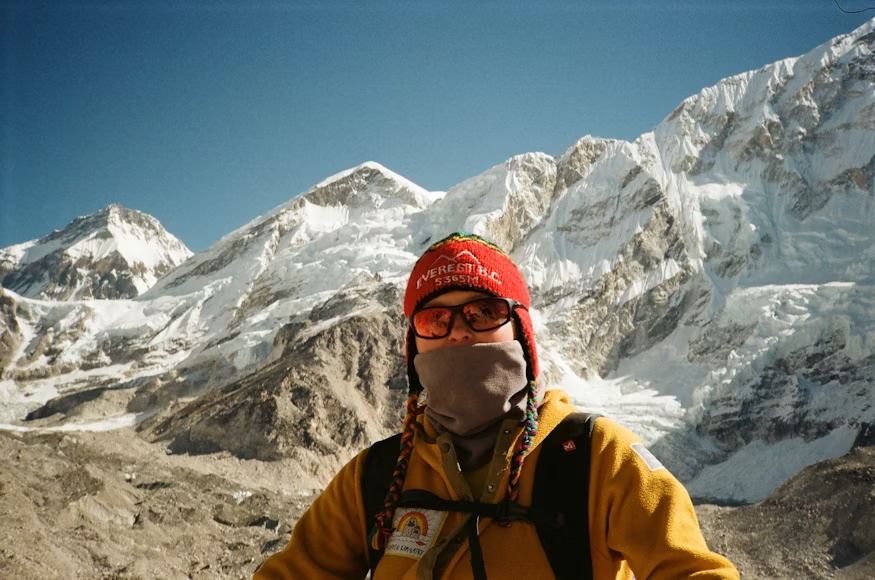
Nepal’s most beloved trekking routes pass through altitudes where AMS is a genuine risk. Here are the two most popular and most demanding routes to be aware of:
Everest Base Camp Trek (5,364 m)
The EBC trek is the crown jewel of Himalayan adventures. Starting from Lukla (2,840 m), trekkers steadily climb through Namche Bazaar (3,440 m), Dingboche (4,410 m), and Gorak Shep (5,164 m) before reaching Base Camp. The risk zone begins around Namche Bazaar and intensifies significantly above 4,000 metres. Acclimatisation days in Namche and Dingboche are not optional they are essential.
Annapurna Circuit & Annapurna Base Camp Trek (4,130 m / 5,416 m)
The Annapurna region offers diverse terrain and stunning scenery. The Circuit crosses the famous Thorong La Pass at 5,416 metres, one of the highest trekking passes in the world. The Base Camp route reaches 4,130 metres. Both routes carry significant AMS risk above 3,000 metres.
Other routes with notable altitude risk include Langtang Valley, Manaslu Circuit, and Upper Mustang.
How to Prevent Altitude Sickness?
Prevention is always better than cure on the mountain. Here is what every trekker should know before heading into the high Himalayas.
1. Acclimatize Properly
The golden rule of high-altitude trekking is climb high, sleep low. On your acclimatization days, you hike to a higher point during the day and return to sleep at a lower elevation. This helps your body slowly adjust to reduced oxygen. Never skip your rest days, no matter how good you feel. The mountain will always be there your health comes first.
2. Ascend Slowly
A well-paced itinerary is your best protection against AMS in Nepal trekking. The general guideline above 3,000 metres is to increase your sleeping altitude by no more than 300–500 metres per day. Rushing the itinerary to save time is one of the most common and dangerous mistakes trekkers make.
3. Stay Hydrated
At altitude, your body loses water faster through respiration and increased urination. Aim to drink 3–4 litres of water per day. Herbal teas, warm soups, and electrolyte drinks are all excellent choices on the trail.
4. Avoid Alcohol and Smoking
Alcohol dehydrates your body and interferes with your blood’s ability to carry oxygen. Smoking further reduces lung efficiency. Both dramatically increase your risk of developing AMS. Save the celebration beer for when you’re safely back at a lower altitude!
5. Consider Medication (Consult a Doctor First)
Diamox (Acetazolamide) is a prescription medication that helps the body acclimatise faster by stimulating faster breathing. It can be effective but has side effects. Always consult your doctor before your trip to see if this is suitable for you.
6. Follow a Proper Itinerary
A responsible trekking itinerary builds in adequate rest days, realistic daily distances, and contingency plans. Avoid agencies or operators that rush you through the mountains just to cut costs. A well-designed itinerary for EBC typically takes 12–14 days not 8.
7. Listen to Your Body
This sounds simple, but it is the advice most often ignored. Never try to push through symptoms hoping they will go away. On the mountain, your body is always telling the truth.
What to Do If Symptoms Appear
Even with perfect preparation, AMS can still occur. Here’s how to respond:
– Stop ascending immediately. Do not gain any more altitude until symptoms have fully resolved.
– Rest at your current altitude. Often, 12–24 hours of rest is enough for mild symptoms to improve.
– Hydrate, eat lightly, and take paracetamol for headache relief.
– Descend if symptoms worsen or do not improve. Descending even 300–500 metres can make a dramatic difference.
– Seek medical attention at the nearest health post or evacuation point for moderate-to-severe symptoms.
– Do not descend alone. Always have a guide or trekking partner with you.
In serious cases, a portable altitude chamber (Gamow bag) can be used at higher camps to simulate lower altitude while awaiting evacuation.
The Role of Experienced Local Guides in Trekking Safety
No technology or guidebook replaces the experience of a knowledgeable local guide.
A trained Nepali trekking guide does far more than point the way. They monitor every member of their group for early signs of AMS often noticing changes before the trekker feels them. They know which tea houses have oxygen supplies, where the nearest health posts are, and how to coordinate helicopter evacuations if needed.
Local guides are also invaluable for making real-time decisions on the trail: slowing the pace, adding an unexpected rest day, or advising descent when conditions or health demand it. They understand the mountain in a way that can only come from years of experience and that knowledge could save your life.
Conclusion: Trek Smart, Trek Safe
Nepal’s Himalayas are extraordinary. The sense of achievement you feel when you reach Everest Base Camp, cross Thorong La, or stand at Annapurna Base Camp with the peaks towering above you, it is indescribable. We want every trekker to have that experience safely.
Altitude sickness is not a reason to avoid trekking in Nepal. It is a reason to prepare well, choose a responsible operator, and respect the mountains. The Himalayas have welcomed adventurers for generations, and with the right precautions, they will welcome you too.
Go slowly. Listen to your body. Trust your guide. The summit will wait for you.
Plan Your Safe Trek with Nepal Tibet Trekking Pvt. Ltd
At Nepal Tibet trekking Pvt. Ltd safety is the foundation of everything we do. Our team of certified, experienced local guides has led hundreds of treks across Nepal’s most iconic routes from Everest Base Camp to the Annapurna Circuit and beyond.
We design personalized itineraries with proper acclimatization days, carry first-aid and oxygen equipment on all high-altitude treks, and ensure 24/7 support throughout your journey. We don’t rush you through the mountains, we make sure you experience them safely and fully.
FAQs
AMS does not discriminate. Your fitness level, age, or past trekking experience does not protect you. Prior experience at high altitude can give you a general idea of how your body responds, but it is not a guarantee. Even experienced trekkers can get AMS if they ascend too quickly.
Mild AMS symptoms can appear within 6–12 hours of arriving at a new high altitude. This is why it’s important not to fly or drive directly to a very high elevation without prior acclimatisation.
Yes, absolutely. The Annapurna Base Camp trail reaches 4,130 metres, which is well within the altitude range where AMS can occur. Trekkers should follow a gradual ascent plan and watch for symptoms from around 2,500 metres onward.
If you develop symptoms of severe AMS including confusion, inability to walk straight, or extreme breathlessness at rest, helicopter evacuation should be arranged immediately. Do not delay. Make sure your travel insurance covers high-altitude trekking and emergency evacuation before your trip.
Altitude sickness, also known as Acute Mountain Sickness (AMS), occurs when your body is exposed to high altitudes too quickly and cannot get enough oxygen. The Everest Base Camp Trek takes you from Lukla (2,860 m) to EBC (5,364 m), which is significantly higher than most people’s usual environment.
Why does it happen:
At high altitudes, air pressure drops, so each breath contains less oxygen. Your body needs time to adjust by increasing breathing rate, heart rate, and red blood cell production. If you ascend too quickly, your body cannot acclimatize, leading to AMS.
Common symptoms:
-
Headache
-
Nausea or vomiting
-
Dizziness or lightheadedness
-
Fatigue or weakness
-
Loss of appetite
-
Difficulty sleeping
Severe AMS can develop into life-threatening conditions such as:
-
High Altitude Pulmonary Edema (HAPE): Fluid in the lungs causes shortness of breath, cough, and extreme fatigue.
-
High Altitude Cerebral Edema (HACE): Swelling in the brain causing confusion, loss of coordination, and potentially coma.
Who is at risk?
-
Trekkers who ascend too quickly without acclimatization.
-
People with pre-existing medical conditions, like heart or lung problems.
-
First-time high-altitude trekkers, though, anyone can get AMS regardless of fitness level.
How to prevent altitude sickness:
-
Ascend slowly: Follow the “climb high, sleep low” principle. Take acclimatization days at Namche Bazaar (3,440 m) or Dingboche (4,360 m).
-
Hydrate well: Drink 3–4 liters of water daily. Avoid excessive alcohol or caffeine.
-
Avoid overexertion: Walk at a comfortable pace and rest frequently.
-
Medication (optional): Some trekkers take Diamox (acetazolamide) under medical guidance to help acclimatization.
-
Know the warning signs: Descend immediately if severe symptoms like confusion, breathlessness at rest, or swelling appear.
Treatment:
-
Mild symptoms can be managed with rest, hydration, and pain relief.
-
Moderate to severe AMS requires descending to a lower altitude immediately.
-
Oxygen cylinders and local medical facilities are available at some points along the trek.


