
When you travel through Nepal whether wandering the lively streets of Kathmandu or trekking deep into the Himalayas one meal connects everyone across the country. For locals, it’s a daily staple. For trekkers, it’s the ultimate fuel for the mountains.
After a long day hiking through rugged trails, crossing suspension bridges, and climbing toward high mountain passes, nothing feels more comforting than a warm plate of Dal Bhat served in a mountain teahouse. This Nepali cuisine isn’t just food. It’s hospitality, culture, and energy on a plate.
That’s why trekkers across Nepal proudly say: “Dal Bhat Power, 24 Hour!”
What is Dal Bhat?
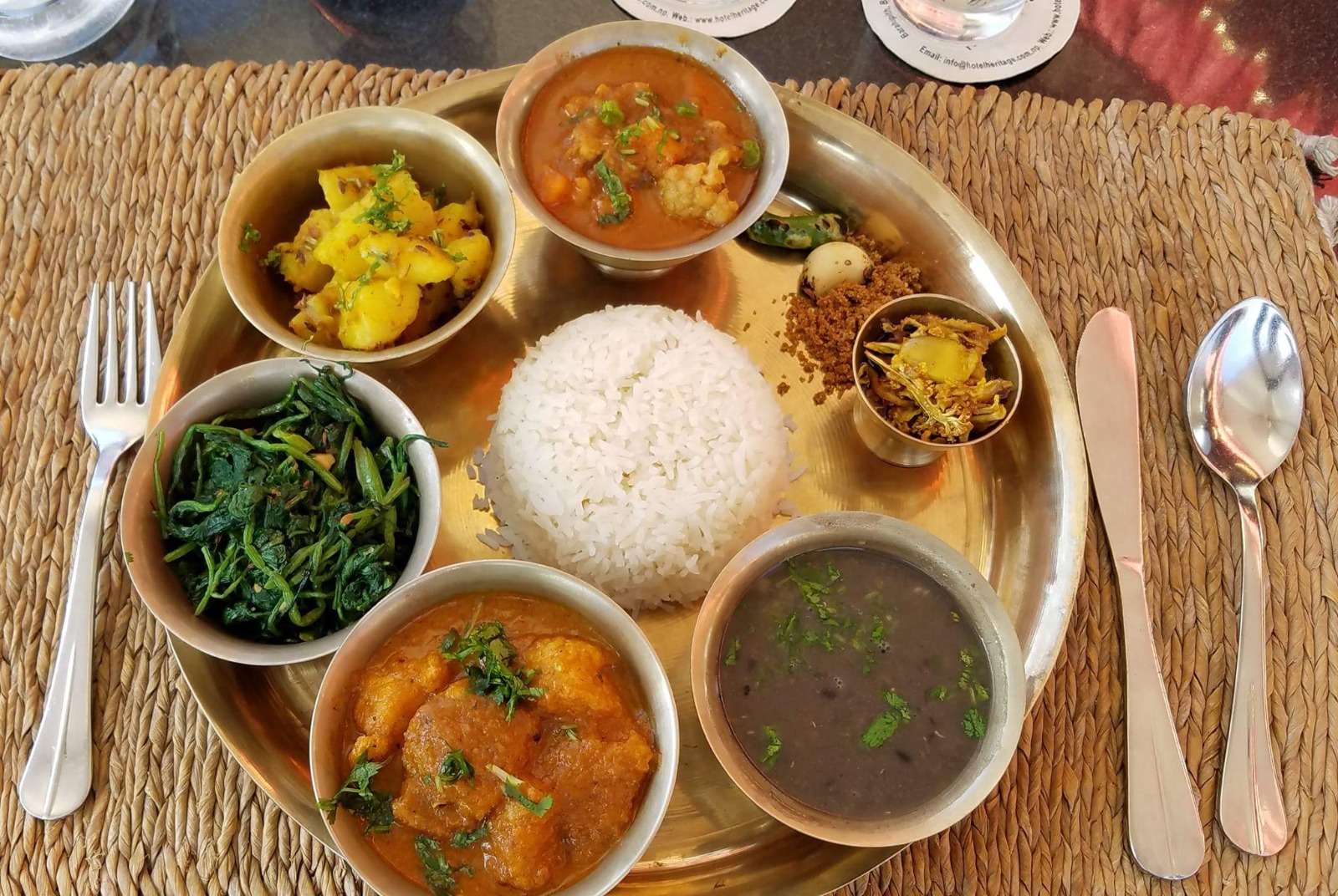
Nepal’s traditional meal, consisting of rice, lentils, vegetables, and flavorful sides, which creates one of the most balanced and nourishing dishes in the Himalayas.
A typical set includes:
Bhat (Rice)
Steamed white rice forms the base of the meal and provides long-lasting energy.
Dal (Lentil Soup)
A warm lentil curry rich in protein, flavored with turmeric, cumin, garlic, and ginger.
Tarkari (Vegetables Curry)
Seasonal vegetables cooked with local spices.
Achar (Pickle)
Spicy and tangy pickles that add bold flavor to the meal.
Saag (Leafy Greens)
Lightly sautéed greens packed with vitamins.
Meat Curry (Optional)
Chicken, mutton, or fish for non-vegetarian trekkers.
Everything is served together on a traditional metal plate called a thali, creating a colorful, nutritious meal.
Why Trekkers Love Dal Bhat?
If you are trekking in Nepal, this cuisine quickly becomes your best friend on the trail. Trekkers rely on it because it provides:
- Long-Lasting Energy
- Rice provides carbohydrates that keep you energized during long trekking days.
- Muscle Recovery
- Lentils supply plant-based protein essential for recovery after hiking.
- Essential Nutrients
- Fresh vegetables and greens provide vitamins, minerals, and fiber.
- Unlimited Refills
Most trekking teahouses in Nepal offer unlimited dal bhat, making it the most satisfying meal on the trail. For this reason, this Nepali dish is the most popular and cost-effective meal on famous trekking routes like:
- Everest Base Camp Trek
- Annapurna Base Camp Trek
- Langtang Valley Trek
- Manaslu Circuit Trek
- Pikey Peak Trek
Dal Bhat: A Cultural Experience in Nepal
This traditional meal is deeply connected to Nepalese life. Most Nepalese families eat Dal Bhat twice a day morning and evening. It’s more than nourishment; it’s a tradition passed through generations. When visiting a Nepali home or a small mountain lodge, offering this meal to a guest is a sign of respect, care, and warmth.
In many villages, people greet each other by asking:
“Dal Bhat khanu bhayo?”
(“Have you eaten Dal Bhat?”)
It’s their way of asking if you are doing well and being taken care of.
Regional Variations of Dal Bhat in Nepal
Although this traditional food is found everywhere in Nepal, each region adds its own flavor.
Himalayan Region
In remote areas like Mustang or Dolpo, meals are simpler but heartier. Ingredients are limited, yet flavors are strong, sometimes enriched with yak butter or local herbs.
Mid-Hill Region
The hills offer more variety with fresh vegetables, lentils, and local spices grown in nearby farms.
Terai Region
In southern Nepal, flavors tend to be spicier and richer, influenced by neighboring Indian cuisines.
A Trekker’s Moment: Dal Bhat in the Mountains
Imagine finishing a long trekking day in the Himalayas. The sun sets behind snow-covered peaks.
The mountain air grows cold. You step into a small teahouse, tired but happy. Soon, the lodge owner brings a steaming plate. The aroma of lentils, warm rice, and fresh vegetables fills the room.
You take your first bite. Instantly, the exhaustion fades. At that moment, Dal Bhat becomes more than a meal — it becomes comfort, warmth, and a memory of the Himalayas.
Dal Bhat: One of the Healthiest Traditional Meals.
Dal Bhat is naturally one of the most balanced traditional meals in the world. It contains:
- Carbohydrates – rice provides energy for trekking
- Protein – lentils support muscle repair
- Fiber – vegetables help digestion
- Vitamins & minerals – leafy greens strengthen immunity
- Low fat – clean and nourishing food
This combination makes it perfect for trekkers exploring high altitudes.
How Dal Bhat is Traditionally Eaten?
This Nepali dish is usually served on a large metal plate with small bowls arranged around the rice.
Traditionally:
- It is eaten with the right hand
- Guests are encouraged to eat as much as they want
- Refills are often unlimited in teahouses
This reflects Nepal’s famous culture of generosity and hospitality.
Best Places to Try Dal Bhat in Nepal
You can find this traditional meal almost everywhere in Nepal, but some experiences are unforgettable.
Mountain Teahouses: The most authentic place to enjoy Dal Bhat during trekking adventures.
Local Nepali Homes: A deeply cultural experience with homemade flavors.
Traditional Restaurants in Kathmandu and Pokhara: Comfortable settings with authentic recipes.
But many travelers say the best Dal Bhat is the one eaten after a long trek in the mountains.
Compared Dal bhat with other Asian Rice meals
Many Asian countries have rice-based meals, but Dal Bhat stands out because of:
- Balanced nutrition
- Multiple side dishes
- Cultural significance
- Unlimited servings for trekkers
It’s not just food — it’s a complete Himalayan experience.
Tips for Travelers Trying Dal Bhat
If you’re visiting Nepal for trekking or cultural travel:
- Start with mild spice if you are sensitive to heat
- Try the vegetarian version — it’s authentic and delicious
- Eat with your hands for a traditional experience
- Mix rice with lentils and vegetables for the best flavor
Experience Nepal Through Dal Bhat
Every trek in Nepal tells a story. And Dal Bhat is part of that story. Whether you’re trekking to Everest Base Camp, exploring hidden Himalayan villages, or discovering Nepal’s rich culture, it will fuel your journey every step of the way. So when you visit Nepal, don’t just try this nepali dish. Experience it. Because in the Himalayas, Dal Bhat isn’t just a meal. It’s the taste of Nepal itself.


