


For the vast majority of trekkers, knowing Everest Base Camp elevation is important in order to plan for acclimatization, safety, and ultimately whether or not you’re going to be able to reach some kind of ‘success’ on your trek.
How High is Everest Base Camp?
The Everest Base Camp (EBC) is one of the world’s highest hiking destinations, at 5,364 meters (17,598 feet) above sea level, making it one of the highest trekking destinations on Earth. This elevation refers to South Everest Base Camp in Nepal, the most popular and famous trekking route. In comparison, the North Everest Base Camp in Tibet is somewhat lower at roughly 5,150 meters, although it is significantly less frequented. At this altitude, the air contains approximately 50% less oxygen than at sea level; therefore, good acclimatization is required.
At 5,364 meters, Everest Base Camp lies well above the altitude where most people begin to feel the effects of thin air. Altitude sickness can start as low as 2,500 meters, meaning trekkers are exposed to extreme high-altitude conditions for several days before reaching Base Camp.
To put this height into perspective, Everest Base Camp is higher than Mont Blanc (4,808m), the tallest mountain in Western Europe, and nearly as high as the summit of Mount Kilimanjaro’s base camps. Although the oxygen percentage in the air remains the same, air pressure drops significantly at this elevation, making each breath far less effective for the body.
The journey to Everest Base Camp.
Reaching EBC requires patience and gradual ascent, rather than hurrying. The journey typically begins with a flight to Lukla (2,860m) and continues via significant acclimatization stops, like as:
* Namche Bazaar (3,440m)—the commercial and cultural hub of the Khumbu region
* Tengboche (3,860m) is noted for its monastery and mountain vistas.
* Dingboche and Lobuche are significant acclimatization settlements.
* Gorak Shep (5,180m) is the penultimate village before Base Camp
The route is designed to help the body adjust gradually. Trekkers generally gain 300–500 meters in sleeping elevation per day once above 3,000 meters. Acclimatization days in places like Namche Bazaar and Dingboche often include short hikes to higher viewpoints before returning to sleep at a lower altitude, a strategy known as “climb high, sleep low.” This slow approach is essential for safely reaching Everest Base Camp’s elevation of 5,364 meters. A typical trek takes 12 to 14 days, as the body acclimatizes itself gradually to the altitude. This gradual acclimatization helps to minimize altitude sickness and ensure you have a good chance of reaching EBC.
How It Feels at Everest Base Camp ?
At this height, even simple actions might feel difficult. Walking, eating, or lacing your boots may make you short of breath. Movements slow down naturally, and rest becomes essential, but the payoff is enormous.
Standing at Everest Base Camp, surrounded by ice towers and Himalayan giants, is an incredible mental and emotional accomplishment that much transcends the physical effort.
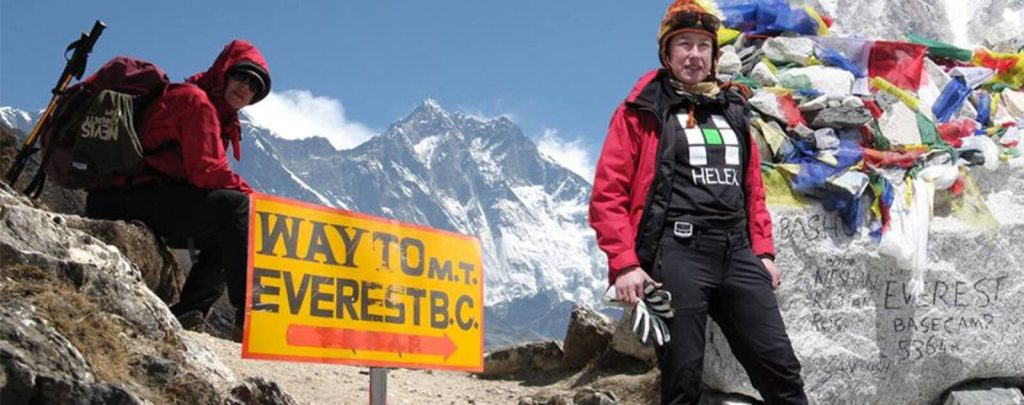
Acclimatization is the key to success.
Reaching the summit of Everest Base Camp is not about being the strongest or fastest; it is about moving gently and gradually. Experienced guides frequently state, “The mountain doesn’t care about your fitness; it cares about your pace.” Following the philosophy of “bistari, bistari” (slowly, slowly) gives your body time to adjust to thinner air. Proper acclimatization, hydration, and rest days greatly increase your chances of a safe and successful journey.
Does Everest Base Camp Height Cause Altitude Sickness?
Due to its extreme elevation, EBC does carry a risk of altitude sickness (AMS) if trekkers ascend too quickly. Common symptoms include headaches, fatigue, nausea, dizziness, and shortness of breath. In rare cases, more serious conditions can develop if symptoms are ignored.
However, with a well-planned itinerary, adequate acclimatization days, and responsible pacing, most trekkers reach EBC safely without major issues.
Why Height Matters at Everest Base Camp ?
Understanding the altitude of Everest Base Camp helps hikers prepare both psychologically and physically. Every year, thousands of people of all ages successfully reach 5,364 meters with adequate acclimatization, a well-planned schedule, and respect for the mountains.


