
Nepal Tibet Trekking Touching soul of the Himalayas

Price Starts from
per person based on 2 PAX
| Group Size | Price (USD) |
|---|---|
| 1-3 | 1465 |
| 4-7 | 1390 |
| 8-12 | 1300 |
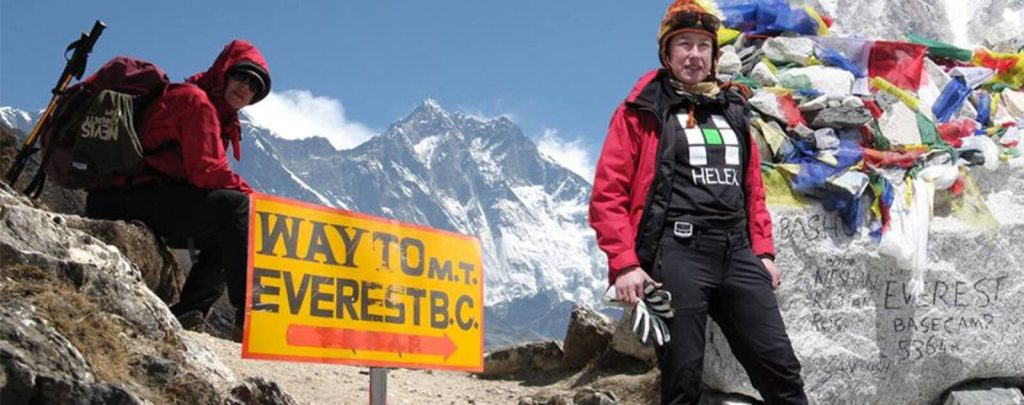


The 17 days Everest Base Camp Trek is one of Nepal’s most famous treks, which goes through Sagarmatha National Park, a UNESCO World Heritage Site. This classic Himalayan adventure provides spectacular views of Mount Everest (8,848.86m), as well as peaks like Lhotse, Nuptse, and Cho Oyu. The walk also takes you past well-known Sherpa settlements like Namche Bazaar, Tengboche, and Dingboche, where you can discover true Sherpa culture, monasteries, and mountain life. Highlights include Kala Patthar (5,545m), the Khumbu Glacier, and the renowned Everest View Hotel.
How to get to the summit ?
The hike starts with a breathtaking 35-minute flight from Kathmandu to Lukla, one of the world’s most daring airports. The trail begins in Lukla and winds its way far into the Everest region.
Trek Duration:
The 17 Days Everest Base Camp trek normally lasts 10 to 17 days, including necessary acclimatization days. The length of the trek is determined by the walking pace and itinerary chosen. Extra buffer days are recommended in case of Lukla flight delays.
Trek Altitude:
The walk goes in altitude from 1,400m to 5,545m, including Everest Base Camp(EBC) at 5,364m and the highest point at Kala Patthar. Altitude sickness can be avoided with proper acclimatization.
Accommodation & Meals
Accommodation is primarily available at local teahouses, which provide clean rooms and minimal amenities. Luxury lodges are offered in select places for an extra fee with prior reservation.
Difficulty of the Everest Base Camp Trek
The EBC trek is somewhat difficult and recommended for hikers of medium fitness. Most hikers can finish the journey successfully with proper planning and acclimatization.
Best time to trek Everest Base Camp
The optimum seasons for the Everest Base Camp trek are spring (March-May) and autumn (September-November), which provide bright skies and stunning mountain views.
Cost and Group Options
The Everest Base Camp trek cost normally ranges between USD 1,200 and USD 3,000, depending on the services and itinerary. Group and private hikes are offered, making it suitable for both single travelers and families.
Insurance & Altitude Safety
Travel insurance is required, as it covers high-altitude trekking and emergency evacuation. Altitude sickness is possible, although adequate acclimatization and supervised trekking significantly lowers the danger.
Note: We provide customized and exclusive Mount Everest Base Camp treks.
Special Offer: Save 4% per person on Spring treks booked before the end of January 2026.
Day 01:Arrival and transfer to Hotel in Kathmandu
Day 02:Cultural Sightseeing in Kathmandu Valley
Day 03:Kathmandu to Lukla 2860m by plane (25-35 minutes flight). And trek to Phakding, 2610m
Day 04:Phakding to Namche Bazaar 3440m.
Day 05:Acclimatization day at Namche Bazaar 3440m.
Day 06:Namche Bazar to Khumjung 3780m
Day 07:Khumjung to Pangboche via Forche 3901m.
Day 08:Pangboche to Dingboche 4410 m.
Day 09: Second acclimatization day at Dingboche 4410 m.
Day 10:Dingboche to Lobuche 4910 m.
Day 11:Lobuche to Everest Base Camp 5364m via Gorakshep 5170m.
Day 12:Gorakshep to Kala Patthar 5644m. and trek to Pheriche 4240m.
Day 13:Tengboche to Namche Bazaar 3440m
Day 14:Namche Bazaar to Lukla 2805m.
Day 15:Lukla to Kathmandu fly
Day 16:Rest and shopping in Kathmandu
Day 17:International Departure
Note: If the above Itinerary doesn’t meet your needs. We can design individualized trekking and tour plans based on your desire, and Private departures are available every day upon your request.
To trek to Everest Base Camp (EBC), you’ll need two main permits:
Khumbu Pasang Lhamu Rural Municipality Permit. This local permit replaces the old TIMS card and can be obtained either in Lukla or Monjo.
Sagarmatha National Park Entry Permit, Available at the park gate in Monjo
Accommodation :
Teahouses along the trail provide basic yet comfortable rooms, usually with twin beds, blankets, and a shared bathroom. Hot showers, Wi-Fi, and charging facilities are available at most lodges for a small extra fee.
During the Everest Base Camp Trek, trekkers can enjoy a surprising variety of local and international dishes served in cozy teahouses and lodges along the trail. Meals are freshly prepared, nutritious, and designed to provide the energy needed for long trekking days in the Himalayas.
Typical Meals:
Dal Bhat: The classic Nepali meal of steamed rice, lentil soup, and vegetable curry is healthy, filling, and unlimited in most teahouses.
Momo: Delicious Nepali dumplings stuffed with vegetables or meat, often served with a spicy dipping sauce.
Noodles and Pasta: Stir-fried or soupy noodles, and pasta with vegetables, egg, or meat.
Fried Rice: A popular dish made with rice, seasonal vegetables, eggs, or meat.
Pancakes & Porridge: Sweet or savory options, perfect for breakfast, made with wheat or buckwheat flour.
Western Dishes: Items like pizza, omelets, and toast are available in most teahouses, often with a local touch such as yak cheese or homemade jam.
Snacks & Beverages:
You’ll find tea, coffee, hot chocolate, soft drinks, beer, and occasionally local wines. However, prices increase with altitude due to transportation costs. It’s a good idea to bring energy bars, nuts, or chocolate for quick snacks on the trail.
Water:
Boiled or bottled water is available at teahouses, but it’s strongly recommended to carry water purification tablets or a portable filter to ensure safe drinking water throughout the trek.
Note: We humbly request you don’t drink/eat milky and meat items (hot chocolate, milk coffee, and milk tea) because milk is powder and not boiled.
Essential Gear for the Everest Base Camp Trek
When preparing for the Everest Base Camp Trek, having the right gear is crucial for comfort, warmth, and safety in the Himalayas. Here’s a complete combined list of must-have items:
Clothing:
Pack warm, layered clothing suitable for changing mountain weather. Include thermal underwear (3–4 pairs): Choose breathable, moisture-wicking underwear made from merino wool or synthetic fabrics to maintain comfort and hygiene throughout the trek. Trekking Shirts (3–4): Pack a mix of short and long-sleeved shirts made from lightweight, quick-drying, and moisture-wicking fabrics like merino wool, polyester, or nylon. These materials keep you comfortable and dry during long hikes. (Avoid cotton, as it retains moisture.), a fleece jacket, a down jacket, gloves, socks (5 pairs), trekking boots, a sleeper, hiking pants, and a waterproof jacket and pants to stay protected from cold and wind.
Headwear:
Keep your head and face protected with a warm hat, sun hat, sunglasses, and a scarf or buff to shield against sun, wind, and dust.
Sleeping Bag:
Carry a warm sleeping bag rated to at least -10°C (14°F) to ensure comfortable rest during chilly nights at higher altitudes.
Trekking Poles:
Use adjustable trekking poles to reduce knee strain and provide stability while walking on steep or uneven terrain.
Camera, trekking bag (70 ltrs, and day bag 10 ltrs) and headlight
First Aid Kit:
Always pack a basic first aid kit, including altitude sickness medication, bandages, pain relievers, and antiseptic cream to handle minor injuries or altitude-related symptoms.
Passport
Travel insurance (including high-altitude rescue)
Some cash (ATMs are rare above Namche Bazaar)
1300
Your journey begins the moment you land at Tribhuvan International Airport. Kathmandu, or Kantipur (the City of Glory), is a vibrant mix of ancient tradition and modern energy. After a warm welcome, we’ll transfer you to your hotel. Use this day to settle in, meet your lead guide for a final briefing, and enjoy your first authentic Nepali meal in the heart of the city.
Hotel
Before heading to the mountains, we spend the day exploring the ‘Living Museum’ of the Kathmandu Valley. We visit Pashupatinath (the Lord of Animals), the most sacred Hindu temple in Nepal, and the massive Boudhanath Stupa, the center of Tibetan Buddhism in exile. We also ascend to Swayambhunath (the Monkey Temple), perched on a hilltop offering panoramic views of the city and its ancient heritage.
Hotel Bed and Breakfast
2610 4 hours walk
The adventure truly begins with a thrilling 30-minute flight to Lukla. In the Sherpa language, Lukla means “Place of many goats and sheep,” though today it is better known as the world’s most famous mountain airstrip. After landing, we begin a gentle trek to Phakding (2,610m). The trail follows the Dudh Koshi (Milk River), so named for its glacial white color. 8Km.
Tea House Breakfast, Lunch and Dinner
3440 7 hours walk
Today is a challenging but rewarding climb. We enter the Sagarmatha National Park at Monjo before crossing the iconic Hillary Suspension Bridge. The final zig-zagging ascent brings us to Namche Bazaar (3,440m). “Namche” likely derives from the Tibetan word for “Big Mouth,” referring to the bowl-shaped mountain flank that cradles this bustling town. 11Km.
Tea House Breakfast, Lunch and Dinner
3860
Acclimatization is the secret to a successful EBC trek. We spend the day in Namche to let our bodies adjust to the thin air. We’ll hike up to the Everest View Hotel for our first glimpse of Everest, Lhotse, and Ama Dablam. You can also visit the Sherpa Culture Museum to learn about the “Tigers of the Snow” who have made these peaks their home.
Tea House Breakfast, Lunch and Dinner
3780 3 hours walk
We take a scenic detour to Khumjung (3,780m), a traditional village nestled in a hidden valley. Khumjung translates to “Valley of the Water/Well,” and it is home to the famous Hillary School and a monastery that claims to house a Yeti scalp. This shorter day helps with further acclimatization while offering a quieter look at Sherpa life away from the main trekking highway.
Tea House Breakfast, Lunch and Dinner
3901 6 hours walk
The trail drops down to the river before climbing up to Phortse, a village known for its potato farms and high concentration of Everest summiters. We continue to Pangboche (3,901m), which means “Large Meadow.” Sitting at the base of the stunning Ama Dablam, this village hosts the oldest monastery in the Khumbu region. 9Km.
Tea House Breakfast, Lunch and Dinner
4410 5 hours walk
As we climb higher, the lush forests disappear, replaced by the stark beauty of the alpine tundra. We reach Dingboche (4,410m). In the local dialect, Dingboche means “Broad/Large Meadow,” an apt name for this wide, wind-swept valley where locals grow barley and buckwheat behind stone walls.
Tea House Breakfast, Lunch and Dinner
This is our final scheduled rest day before the push to Base Camp. To keep our muscles active and help our blood oxygenate, we take a steep hike up Nagarjun Hill. From the top, the views of Makalu (the world’s 5th highest peak) and the Island Peak valley are nothing short of spectacular.
Tea House Breakfast, Lunch and Dinner
4910 6 hours walk
The trail climbs toward the Khumbu Glacier. We stop at Thukla for lunch before ascending the “Memorial Pass,” where stone monuments stand in silent tribute to the climbers who lost their lives on Everest. We reach Lobuche (4,910m), named after the “Rock-heap” peaks that tower above the settlement. 8Km.
Tea House Breakfast, Lunch and Dinner
5364 9 hours walk
The big day! We trek along the rocky moraine of the Khumbu Glacier to Gorak Shep (5,170m). Its name translates to “Dead Crow,” perhaps referring to the lack of vegetation and the harsh environment. After a quick meal, we push on to Everest Base Camp (5,364m). Standing here, amidst the Khumbu Icefall and surrounded by the highest peaks on Earth, is a moment of pure triumph. We return to Gorak Shep for the night.
Tea House Breakfast, Lunch and Dinner
5545/4240 8 hours walk
Before dawn, we climb Kala Patthar (5,644m), which means “Black Rock.” This is the highest point of our trek and offers the iconic, unobstructed view of Mount Everest’s summit. After soaking in the sunrise, we descend rapidly to Pheriche (4,240m). The lower altitude and thicker air in this riverside village will make you feel like you have superhuman energy. 13Km.
Tea House Breakfast, Lunch and Dinner
3440 8 hours walk
Our descent continues as we pass through Tengboche, home to the most famous monastery in the region, spectacularly perched on a ridge. We follow the trail through rhododendron and pine forests, crossing back over the Dudh Koshi to return to the familiar comforts and hot showers of Namche Bazaar. 14Km.
Tea House Breakfast, Lunch and Dinner
2805 8 hours walk
The final day on the trail is a long but joyful walk as we retrace our steps down the Hillary Bridge and back to Lukla. This is the perfect evening to celebrate with your team and porters—the unsung heroes of your journey—sharing a final mountain meal and perhaps a toast to your success. 19 Km.
Tea House Breakfast, Lunch and Dinner
We take an early morning flight back to Kathmandu. After the quiet of the mountains, the city’s sights and sounds will feel incredibly vivid. We’ll transfer you to your hotel, where you can finally enjoy a long, well-deserved rest or a spa treatment for your tired legs.
Hotel
This is a “buffer” day in case of flight delays from Lukla, but it’s also the perfect time for some souvenir shopping in Thamel. From pashminas to singing bowls, you can find the perfect memento of your trek. In the evening, we’ll enjoy a farewell dinner to reflect on the incredible journey you’ve just completed
Hotel Breakfast
It’s time to say Namaste and Tashi Delek. We will transfer you to the airport for your flight home. You leave Nepal not just with photos, but with the strength of the mountains in your spirit and memories that will last a lifetime.
All our published dates are guaranteed departures. If the dates don’t match with your travel plans, we are more than happy to create your desired date. Let us know what kind of trip you are looking for and our travel experts will help plan your tailor-made trips in your dream destination.
Price Starts from
per person based on 2 PAX
We offer Group Price
| Start Date | End Date | Price (USD) | Availability | Booking |
|---|---|---|---|---|
| Tue, Dec 30, 2025 | Thu, Jan 15, 2026 | $1465 | Available | |
| Thu, Jan 15, 2026 | Sat, Jan 31, 2026 | $1465 | Available | |
| Wed, Jan 21, 2026 | Fri, Feb 6, 2026 | $1465 | Available | |
| Sun, Mar 1, 2026 | Tue, Mar 17, 2026 | $1465 | Available | |
| Sat, Mar 7, 2026 | Mon, Mar 23, 2026 | $1465 | Available | |
| Mon, Mar 9, 2026 | Wed, Mar 25, 2026 | $1465 | Available | |
| Wed, Mar 18, 2026 | Fri, Apr 3, 2026 | $1465 | Available | |
| Sat, Mar 28, 2026 | Mon, Apr 13, 2026 | $1465 | Available | |
| Tue, Mar 31, 2026 | Thu, Apr 16, 2026 | $1465 | Available | |
| Fri, Apr 3, 2026 | Sun, Apr 19, 2026 | $1465 | Available |
The ideal seasons are spring (March–May) and autumn (September–November).
Spring brings mild temperatures, clear skies, and rhododendron blooms, while autumn offers crisp weather, excellent visibility, and stable conditions after the monsoon. Winter (December–February) is very cold, and summer (June–August) brings heavy rain and flight disruptions
The trek is moderately challenging — no climbing skills are needed, but you’ll walk 5–8 hours daily on rugged trails at high altitude. A good level of fitness, endurance, and mental determination is required to handle steep ascents and long days
No, but it helps!
The standard EBC route doesn’t require mountaineering skills. Still, having previous multi-day hiking or trekking experience makes the journey more comfortable and enjoyable.
You need two permits:
Sagarmatha National Park Entry Permit
Khumbu Pasang Lhamu Rural Municipality Permit
Both are arranged by your trekking agency.
Also, carry a valid passport, Nepal visa, and travel insurance covering high altitude and evacuation.
Everest Base Camp sits at 5,364 m (17,598 ft) above sea level.
Most trekkers also hike to Kala Patthar (5,545 m) for the best sunrise view of Mount Everest.
Most itineraries take 12–14 days, including acclimatization days in Namche Bazaar and Dingboche. You can extend or shorten the trek based on side trips, physical fitness, or weather conditions.
The classic route starts with a flight from Kathmandu (or Ramechhap) to Lukla, then continues through Phakding, Namche Bazaar, Tengboche, Dingboche, Lobuche, and Gorakshep before reaching Base Camp. Most return the same way.
Expect 5–8 hours of walking per day, with rest days for acclimatization.
Some days are shorter for adaptation, while summit days (Kala Patthar or Base Camp) can be longer.
Anyone with good basic fitness (regular walking, cycling, or gym cardio) can complete the trek. Train 2–3 months ahead — long walks with a loaded backpack, uphill hikes, and cardio are ideal.
Altitude sickness (AMS) can affect anyone.
Symptoms include headache, nausea, fatigue, loss of appetite, and dizziness.
Reduce risk by:
Ascending gradually
Taking acclimatization days
Staying hydrated
Following your guide’s pace
Medicines like Diamox (Acetazolamide) can help if prescribed by a doctor.
Minor issues can be treated by your guide or at clinics in Namche or Pheriche. For serious illness or injury, helicopter evacuation will be arranged (if covered by your insurance). Always carry insurance details and an emergency contact.
Flights are often delayed by weather (fog or wind). Your trekking agency will help rebook or arrange a helicopter (USD 500–800) or charter flight. Keep 1–2 extra days at the end of your trip before your international flight
Spring: Mild days, cool nights, clear skies
Autumn: Dry, stable, perfect for photos
Winter: Freezing nights (−10 °C to −15 °C)
Monsoon: Cloudy, slippery trails
Daytime at high altitude: around 5–10 °C; nighttime: below freezing.
Not directly, Base Camp is surrounded by high peaks. The best viewpoint is Kala Patthar (5,545 m) above Gorakshep, offering spectacular sunrise views of Everest, Lhotse, and Nuptse.
You’ll stay in local tea houses — simple lodges with twin rooms, blankets, and shared toilets.
Meals are freshly cooked: dal bhat (rice & lentils), noodles, pasta, soups, pancakes, and eggs. Vegetarian meals are common; meat becomes rare at higher altitudes.
Bring enough Nepalese Rupees (NPR) for the trek, as ATMs only exist in Lukla and Namche Bazaar. You’ll need extra cash for Wi-Fi, hot showers, snacks, and tips (around USD 200–300 total for extras).
Yes, through Everest Link Wi-Fi cards (NPR 800–1000 for 1GB). Mobile networks (Ncell, NTC) work up to Tengboche or Lobuche but are unreliable at higher elevations.
Yes, but power is limited. Charging costs USD 2–5 per device using solar power or generators. Carry a power bank (10,000–20,000 mAh) or solar charger for convenience.
Hot showers are available in lower villages (USD 3–7). Above Dingboche, the water is too cold, so trekkers use wet wipes instead. Toilets are mostly basic, squat-style, and carry toilet paper and sanitizer.
Bottled water is available but costly and not eco-friendly. Use boiled, filtered, or UV-purified water instead. Carry a reusable water bottle and purification tablets to stay safe and sustainable
Each porter carries 20–25 kg total (for two trekkers). You’ll have your daypack (5–8 kg) with water, camera, and warm layers. Pack light and respect porter welfare.
Tipping is expected at the end of the trek.
Guide: USD 10–15 per day
Porter: USD 6–10 per day
Give in Nepalese Rupees, preferably in an envelope with a thank-you note.
Yes. The EBC trail is one of Nepal’s safest routes thanks to its popularity and friendly Sherpa communities. Still, trekking with a licensed guide is recommended for safety and cultural comfort.
Yes. The EBC trail is one of Nepal’s safest routes thanks to its popularity and friendly Sherpa communities.
Still, trekking with a licensed guide is recommended for safety and cultural comfort.
Mandatory.
Your insurance must cover:
Emergency helicopter evacuation (above 5,000 m)
Medical treatment
Trip delays/cancellations
Always carry a printed and digital copy of your policy.
Absolutely.
You can extend your trek to Gokyo Lakes, Three Passes, or Ama Dablam Base Camp, depending on time and fitness. Your agency can design a private or tailor-made itinerary to suit your preferences.
Yes.
Some gyms in the UK, Australia, and Germany offer altitude simulation. However, the best preparation is gradual trekking and acclimatization once in Nepal.
Respect Sherpa and Buddhist traditions:
Dress modestly
Don’t touch heads or step over prayer flags
Ask before photographing locals or monasteries
Avoid meat near monasteries
Use refillable bottles and dispose of waste responsibly.
Follow “Leave No Trace” ethics:
Don’t litter
Carry reusable bottles and bags
Stay on trails
Support eco-lodges
Your small actions protect the fragile Himalayan ecosystem
Because we offer authentic Himalayan experiences with licensed local guides, custom itineraries, and personalized service at affordable prices.
With decades of experience and a commitment to safety, sustainability, and cultural respect, Nepal Tibet Trekking Pvt. Ltd. ensures your Everest journey is unforgettable — from arrival to the final farewell.